-

Bachelor's

-

Masters
-

MBA
-

Doctorate
-

Micro Credit
-

Explore all Courses
-
Postgraduate Certifications

-
Postgraduate Diploma
-
Undergraduate Diploma
-
Diploma



Are Solar Panels Really Eco-Friendly? The Untold Story of Their Waste
Author: aishwarya sancheti
|4
MINS READ
| 0
| 213
Created On: 04 October, 2025
Share




Table of Contents (TOC):
- Why Solar Energy Still Matters
- The Waste Problem We Don’t Talk About
- Recycling Solar Panels: Promise vs Reality
- Solar Energy: Advantages vs Disadvantages
- Why the Waste Story Is “Untold”
- What Needs to Change
- Conclusion
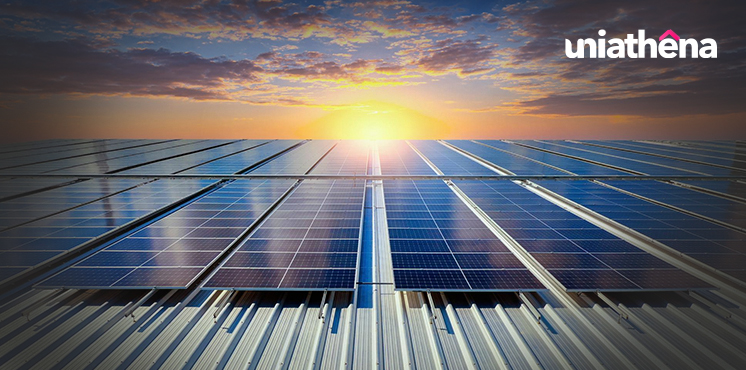
Solar energy has become a symbol of clean living and renewable progress. Rooftops glitter with panels, nations are scaling up solar farms, and the message is clear: this is the future. But here’s the truth we rarely discuss: what happens when those panels reach the end of their life? That is the untold story and it’s becoming a global environmental challenge.
Why Solar Energy Still Matters
Solar panels offer undeniable benefits. They cut greenhouse gas emissions by replacing fossil fuels, operate for 25–30 years with minimal pollution, and provide one of the cheapest and most scalable forms of renewable energy. In terms of clean power generation, solar energy is good for the environment. But eco-friendly doesn’t always mean impact-free.
The Waste Problem We Don’t Talk About
The issue is not electricity generation but what happens at end-of-life.
A typical solar panel contains mostly glass and aluminum, which are safe and recyclable. However, they also contain silicon, plastics, and trace metals like lead, cadmium, copper, and silver. If mishandled, these can leach into soil and water, creating environmental hazards.
The scale is staggering:
Region/Source | Project Solar Panel Waste | Source |
Global | 78 million tonnes by 2050 | IRENA / IEA-PVPS |
United States | Up to 10 million tonnes by 2050 | US DOE |
India | 600,000 tonnes by 2030; | The Guardian |
Australia | 91,165 tonnes per year by 2030 | NSW Government |
That’s millions of tonnes of green energy waste piling up worldwide.
Recycling Solar Panels: Promise vs Reality
It is true that solar panels can be recycled, and complex technologies that are now available are able to recover over 90 percent of the materials, such as high-purity silicon and more valuable metals, such as silver. This seems on paper a big sustainability victory.
But the truth of the matter is very different. Currently, the majority of the recycling plants reclaim only the glass and aluminum frames since they are the simplest and least expensive parts to reclaim. Silicon and precious metals can be extracted, but this is both expensive and is not commonly carried out on a large scale. There is also the concept of the circular economy, by which old panels are used to create new ones, however, in reality, the economics does not work.
At this moment, it is just less expensive for companies to dump their old panels in landfills rather than recycle them. Millions of solar panels will fall prey to waste rather than tuning into a sustainable loop unless better policies and massive investment in renewable energy waste management is provided.
Solar Energy: Advantages vs Disadvantages
Advantage | Disadvantage |
Clean electricity, no emissions during operation. | Manufacturing creates emissions and |
Long lifespan (25–30 years) | Early replacements add unexpected waste |
Renewable and abundant resources | End-of-life disposal challenge; toxic risks |
Falling costs, improving solar | Land use for large farms; recycling costs |
Why the Waste Story Is “Untold”
If solar panels are supposed to be green, why don’t we hear much about their waste problem? The reasons are threefold.
- First, there are regulation gaps in many countries. Old solar panels are not even classified as electronic waste, which means they escape proper monitoring and disposal requirements.
- Second, economic barriers play a big role. The recycling price can be more expensive than the price of the materials to be collected and therefore landfilling is the most affordable method.
- Third, awareness is low. The majority of home owners and even most of the businesses are just not aware of what to do with their old panels after they cease to perform their duties. In other words, it is more economical and feasible to dispose of solar panels without proper rules, awareness and incentives than recycling them.
What Needs to Change
In order to make solar really sustainable, governments, manufacturers and users should:
- Design better: Facilitating recycling of panels.
- Implement regulations: E-waste on panels and compulsory take-back program.
- Invest in recycling: Increase the facilities globally and render them cost-efficient.
- Educate: Increase the awareness of solar panel lifecycle and disposal.
Conclusion
So, are solar panels environmentally friendly? Yes, but only if we plan for their afterlife.
Solar energy is a powerful ally against climate change. But unless we tackle the waste crisis head-on, today’s clean technology could become tomorrow’s pollution problem. The good news? With smarter design, stronger policies, and better recycling, we can ensure solar power remains not just renewable, but truly sustainable.
Explore Related Courses











COMMENTS(0)
Explore Related Courses
Our Popular Insights
Careers are shifting faster than ever, and staying relevant takes more than experience. Explore UniAthena’s most-read blogs for sharp insights, emerging skills, and practical pathways that help you move forward with clarity and confidence in a changing professional world.




How to Switch Career to Data Analytics?
Read More
6
mins read



How to Switch Career to Data Analytics?
Read more
6
mins read

Get in Touch

It’s Time to Start
Join NowMost Popular Online Specialization
- Master of International Business Administration
- Master of Business Administration
- MBA in General Management- FastTrack
- Master in Innovation and Entrepreneurship
- MBA-Family Business Management
- Master in Procurement and Contract Management
- Extended Diploma in Business Analytics (SCQF Level 11)
- Diploma in Supply Chain and Logistics Management (SCQF Level 11)
- Strategic Human Resource Management Practitioner
- Master in Data Science
- Master in Engineering Management
Trending Online
- Integrated Doctorate of Business Administration
- Postgraduate Certificate in Finance for Next Generation Managers
- Master of Business Administration- General Management (Fast Track)
- Postgraduate Certificate in Socio-Economic and Legal Framework
- Postgraduate Certificate in Business Sustainability
- Certified Manager
- Supply Chain Management Practitioner
- MBA - AI in Business
- MBA - Accounting & Finance
- Master in Supply Chain and Logistics Management
Top Universities Online Certificates
- Postgraduate Certificate in International Marketing Management
- Postgraduate Certificate In International Human Resource Management
- Postgraduate Certificate in Strategic Management
- Postgraduate Certificate in Procurement & Contracts Management
- Postgraduate Certificate in Business Analytics
- Postgraduate Certificate in Strategic Supply Chain & Logistics Management
- Postgraduate Certificate in Human Resource and Leadership
- Project Management Practitioner
- Postgraduate Certificate in Supply Chain Design & Implementation
- Postgraduate Certificate in Management Accounting and Finance
Accredited Online Degree Program
- MBA - Digital Transformation
- MBA - Family Business Management
- MBA - Marketing Management
- MBA in Quality Management
- MBA - Business Intelligence & Data Analytics
- MBA in Operations & Project Management
- MBA in Energy Management
- MBA In Construction & Safety Management
- Master in Organisational Leadership
- Master in Public Health
- Master in Construction Management
- Bachelor of Arts in Business Administration


 Install Now


UniAthena is an Ed-Tech, offering flexible, affordable learning solutions, including Free-Learning Upskilling Courses and Academic Programs in partnerships with accredited and globally renowned universities and professional qualification bodies.


Do you have any questions ?
Feel free to send us your questions or request a free consultation
Send a message
UK
Athena Global Education
Magdalen Centre,
Robert Robinson Avenue,
Oxford, OX4 4GA, UK
Phone : 01865 784299
MIDDLE EAST
Athena Global Education FZE
Block L-03, First Floor,
P O Box 519265, Sharjah Publishing City,
Free Zone, Sharjah, UAE
Phone : +971 55 879 5492
INDIA
Uniathena Private Limited
9A,Midas Tower
Phase 1
Hinjewadi Rajiv Gandhi Infotech Park
Pune-411057
Phone: +91 9145665544
All Copyrights Reserved @ Athena Global Education 2021-2026