-

Bachelor's

-

Masters
-

MBA
-

Doctorate
-

Micro Credit
-

Explore all Courses
-
Postgraduate Certifications

-
Postgraduate Diploma
-
Undergraduate Diploma
-
Diploma



What is Product Design?
Author: maharajan p
|7
MINS READ
| 0
| 134
Created On: 06 April, 2026
Share




Table of Contents (TOC):
- Introduction
- Key Takeaways
- What Is Product Design?
- What Does a Product Designer Do?
- How Much Do Product Designers Earn?
- Is Product Design a Good Career Choice?
- Skills Required to Become a Product Designer
- Final Take
- FAQs
Introduction
Before product designers existed, software was built by engineers, for engineers. If you could figure it out, great. If not, that was your problem.
Then companies started losing users. Not because the product didn't work, but because real people couldn't use it.
That one shift changed everything. Someone had to sit between the engineers building the product and the users trying to use it. Someone who could ask the uncomfortable question: does this actually make sense to a real person?
That's what product designers do.
Key Takeaways:
- Product design connects users, technology, and business goals. Understanding the product design process helps ensure digital products are not only functional but also intuitive and useful for real users.
- Product designers research user needs, plan interactions, design interfaces, and continuously improve the product through testing and feedback.
- Product design includes several specialized roles. Understanding the types of product design, such as UX design, UI design, and interaction design helps teams build better user experiences.
- Building the right mix of skills is essential. Skills like user research, wireframing, interaction design, product strategy, and analytical thinking help designers create products that users actually adopt.
What Is Product Design?
Product design is the process of creating products that solve real problems for users while meeting business goals. A product designer studies what users need, translates those needs into features, and works closely with engineers and product managers to turn ideas into usable products.
What Does a Product Designer Do? Roles and Responsibilities
A product designer is responsible for turning user needs and business goals into functional, usable products. They study problems, design solutions, test those solutions, and refine them until the product works smoothly for real people.
At a practical level, product designers:
- Identify user problems and research real needs
- Plan user flows and product interactions
- Design interfaces that are clear and intuitive
- Test and improve the product based on feedback
However, what a product designer does can differ depending on the company, product stage, and team structure. In some organizations, one designer handles everything. In others, responsibilities are split across specialized roles.
Here are four common roles you’ll find within product design:
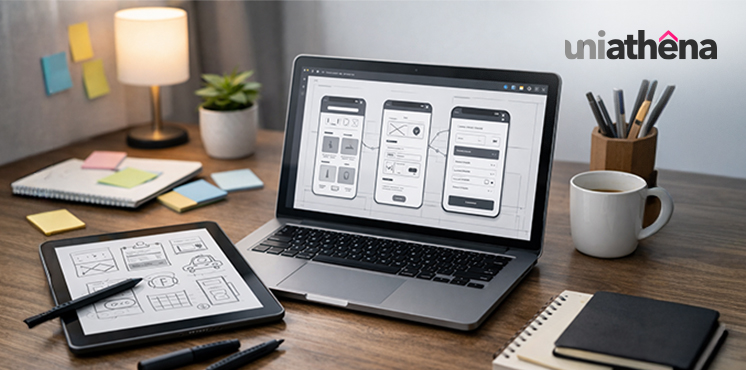
- UX Designer (User Experience Designer): Focuses on how the product works. They research users, map user journeys, design wireframes, and structure the overall experience. Their goal is to make the product logical, usable, and friction-free.
- UI Designer (User Interface Designer): Focuses on how the product looks and feels visually. They design layouts, typography, color systems, buttons, and visual components. Their job is to make the interface clean, consistent, and visually engaging.
- Interaction Designer: Works on how users interact with elements inside the product. They define animations, transitions, micro-interactions, and response behaviors. Their goal is to make interactions feel natural and intuitive.
If you want to get into product design, understand the product first. Before you design screens, you need to know how a product makes money, how users use it, and why certain features exist.
Check out the program: Basics of Product – CIQ Certified. This program gives you the fundamentals of how a product actually creates value, how users adopt it, and how business strategy influences design decisions.
Also Read: Free UI/UX Design Courses with Certificates
Product Designer Salary: How Much Do Product Designers Earn?
Product design is often described as a high-paying, future-proof career, but the reality depends on where you work and how far you progress. Salaries vary widely by country, experience level, and employment type. The table below breaks down what product designers earn at different stages of their careers across key global markets.
Note: Salary figures are based primarily on Glassdoor data, which reflects country-level averages. Actual pay may vary by city, company, and experience. Check multiple platforms to estimate typical salaries in your region before negotiating with HR.
Also Read: Why SEO is Essential for Product Marketing in the AI Era
Is Product Design a Good Career Choice?
Yes, product design can be a strong career choice, but only if it matches how you like to work.
Product design is a good fit if you enjoy solving problems, not just creating visuals. Designers spend a lot of time understanding user needs, working with engineers, and making trade-offs between what’s ideal and what’s practical. If you like thinking through problems and improving things step by step, product design rewards that mindset.
It’s also a career with long-term demand. As companies continue to build apps, software platforms, and digital tools, they need people who can design products that users actually want to use. Product designers sit close to business decisions, which makes the role harder to replace and more valuable over time.
You’re likely to enjoy product design if you:
- You’re curious about how users think, where they get stuck, and what frustrates them.
- You like breaking big problems into smaller, manageable parts and improving them over time.
- You’re okay working closely with engineers, product managers, and other stakeholders instead of working in isolation.
Also Read: How to Start a Business?
Skills Required to Become a Product Designer
To become a product designer, you need a mix of thinking skills, technical skills, and business understanding. Here are the core skills you’ll need:
- User research and empathy
- Problem-solving and critical thinking
- Wireframing and prototyping
- UI design fundamentals (layout, typography, color, hierarchy)
- Interaction design
- Usability testing
- Basic understanding of product strategy
- Communication and collaboration
- Analytical thinking
- Iteration and feedback handling
A strong product designer understands both the user and the business. That means knowing how ideas are shaped, how markets are defined, and how decisions are made before a product even reaches the design stage.
You can learn core skills like idea development, product strategy, and marketing positioning through online programs instead of going through trial and error.
Here are some programs you can try:
- Diploma in Product Development: Covers how to take an idea and turn it into a structured product concept.
- Basics of Strategic Analysis Models - CIQ Certified: Teaches practical business analysis tools and models used to evaluate products and markets.
- Basics of Marketing Mix & STP - CIQ Certified: Explains segmentation, targeting, positioning, and how products are shaped for specific audiences.
- Essentials of Product Basics & Core Market Strategy - CIQ Certified: Introduces the fundamentals of product structure, consumer goods, and the marketing strategies used to position them in the market.
Learning these foundations can give you an advantage, especially when you start working with product managers, marketers, and business teams.
Final Take
If you're asking whether product design is a good career choice, the answer is simple: it can be, if you enjoy solving problems, working with people, and thinking beyond visuals.
It’s a field with strong demand, solid salary growth, and clear progression paths. But it requires continuous learning, collaboration, and comfort with feedback.
If you’re willing to build both creative and strategic skills, product design isn’t just a trend-driven role, it’s a sustainable career with long-term value.
Also Read: How to Learn Job-Ready Skills Online and Get Hired Faster
FAQs
Q1. What qualifications do you need to become a product designer?
A: You don’t need a specific degree. Most product designers build skills through design courses, portfolios, internships, and hands-on project experience.
Q2. Is product design different from UX design?
A: Yes. UX design focuses mainly on user experience, while product design includes UX, UI, and business strategy decisions.
Q3. How long does it take to become a product designer?
A: It typically takes 6 months to 2 years, depending on your learning pace, practice time, and portfolio development.
Q4. Do product designers need coding skills?
A: Coding is not mandatory, but understanding basic HTML, CSS, and development workflows helps you collaborate better with engineers.
Q5. Is product design in demand?
A: Yes. As companies continue building digital products, demand for skilled product designers remains strong across tech, startups, and enterprises.
Q6. Can you become a product designer without experience?
A: Yes. Many designers start with personal projects, internships, or freelance work to build a portfolio before landing full-time roles.
Explore Related Courses









COMMENTS(0)
Explore Related Courses
Our Popular Insights
Careers are shifting faster than ever, and staying relevant takes more than experience. Explore UniAthena’s most-read blogs for sharp insights, emerging skills, and practical pathways that help you move forward with clarity and confidence in a changing professional world.



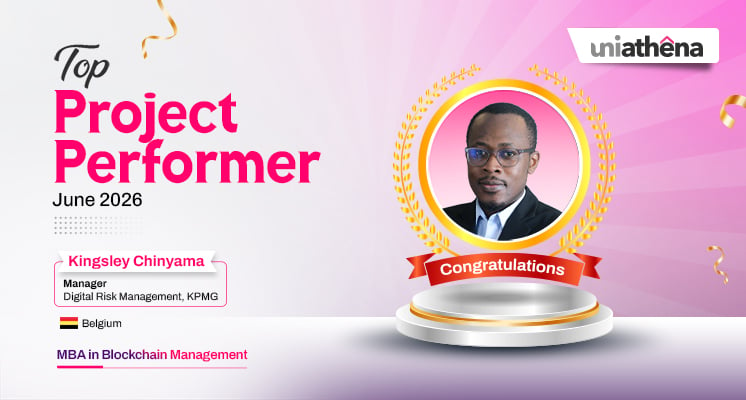
🌟 Top Project Performer – June 2026 🌟
Read More
1
mins read


🌟 Top Project Performer – May 2026 🌟
Read More
1
mins read

🌟 Top Project Performer – June 2026 🌟
Read more
1
mins read

🌟 Top Project Performer – May 2026 🌟
Read more
1
mins read
Get in Touch

It’s Time to Start
Join NowMost Popular Online Specialization
- Master of International Business Administration
- Master of Business Administration
- MBA in General Management- FastTrack
- Master in Innovation and Entrepreneurship
- MBA-Family Business Management
- Master in Procurement and Contract Management
- Extended Diploma in Business Analytics (SCQF Level 11)
- Diploma in Supply Chain and Logistics Management (SCQF Level 11)
- Strategic Human Resource Management Practitioner
- Master in Data Science
- Master in Engineering Management
Trending Online
- Integrated Doctorate of Business Administration
- Postgraduate Certificate in Finance for Next Generation Managers
- Master of Business Administration- General Management (Fast Track)
- Postgraduate Certificate in Socio-Economic and Legal Framework
- Postgraduate Certificate in Business Sustainability
- Certified Manager
- Supply Chain Management Practitioner
- MBA - AI in Business
- MBA - Accounting & Finance
- Master in Supply Chain and Logistics Management
Top Universities Online Certificates
- Postgraduate Certificate in International Marketing Management
- Postgraduate Certificate In International Human Resource Management
- Postgraduate Certificate in Strategic Management
- Postgraduate Certificate in Procurement & Contracts Management
- Postgraduate Certificate in Business Analytics
- Postgraduate Certificate in Strategic Supply Chain & Logistics Management
- Postgraduate Certificate in Human Resource and Leadership
- Project Management Practitioner
- Postgraduate Certificate in Supply Chain Design & Implementation
- Postgraduate Certificate in Management Accounting and Finance
Accredited Online Degree Program
- MBA - Digital Transformation
- MBA - Family Business Management
- MBA - Marketing Management
- MBA in Quality Management
- MBA - Business Intelligence & Data Analytics
- MBA in Operations & Project Management
- MBA in Energy Management
- MBA In Construction & Safety Management
- Master in Organisational Leadership
- Master in Public Health
- Master in Construction Management
- Bachelor of Arts in Business Administration


 Install Now


UniAthena is an Ed-Tech, offering flexible, affordable learning solutions, including Free-Learning Upskilling Courses and Academic Programs in partnerships with accredited and globally renowned universities and professional qualification bodies.


Do you have any questions ?
Feel free to send us your questions or request a free consultation
Send a message
UK
Athena Global Education
Magdalen Centre,
Robert Robinson Avenue,
Oxford, OX4 4GA, UK
Phone : 01865 784299
MIDDLE EAST
Athena Global Education FZE
Block L-03, First Floor,
P O Box 519265, Sharjah Publishing City,
Free Zone, Sharjah, UAE
Phone : +971 55 879 5492
INDIA
Uniathena Private Limited
9A,Midas Tower
Phase 1
Hinjewadi Rajiv Gandhi Infotech Park
Pune-411057
Phone: +91 9145665544
All Copyrights Reserved @ Athena Global Education 2021-2026