-

Bachelor's

-

Masters
-

MBA
-

Doctorate
-

Micro Credit
-

Explore all Courses
-
Postgraduate Certifications

-
Postgraduate Diploma
-
Undergraduate Diploma
-
Diploma



How To Learn Python For Free?

Author: munazzah ali
|5
MINS READ
| 0
| 215
Created On: 10 February, 2026
Share




Table Of Contents (TOC):
- Introduction
- Key Takeaways
- Importance of Learning Python
- Why Learn Python and Why It's Perfect for Beginners?
- Python vs Java vs C++: A Quick Beginner Comparison
- Where to Find Free Python Courses?
- Conclusion
- FAQ’s
Introduction
Have you ever looked at a piece of code and thought, “This looks impossible to learn”? The truth is, Python proves that learning to code doesn’t have to be confusing or stressful. It’s one of the easiest languages to understand, even if you’ve never written a single line of code before. From building small tools to automating daily tasks, Python gives you the power to create things faster than you might expect.
And the best part? You don’t need paid courses or expensive coaching to begin your journey. Today, there are plenty of reliable platforms where you can learn Python for Free and from the comfort of your home. This article will show you why Python is perfect for beginners and how you can start learning it quickly, easily, and without spending any money.
Key Takeaways:
- Python is beginner-friendly due to its simple syntax and readability.
- It is widely used across industries, making it a valuable skill.
- Free learning resources make Python accessible to anyone.
- Python supports both basic learning and advanced applications.
Importance of Learning Python
Python has gained popularity because of its versatility and worldwide usage. Its importance is seen in various fields like web development, data analysis, artificial intelligence, scientific computing, and many more. Python is simple, and it can be accessed by beginners. However, at the same time, it is also robust. It powers the infrastructure of huge companies like Google, Netflix, and more.
Learning Python can enhance career prospects, particularly in the areas of software development, data science, machine learning, and engineering networks. This has helped create a lively developer community that contributes to a rich ecosystem of libraries and frameworks, thereby helping with continuous learning and professional growth.
Why Learn Python and Why It's Perfect for Beginners?
Among many programming languages, Python gained fame for ease and readability, making it ideal for beginners. The clear syntax and often shortened code compared with other programming languages make learning easier, even for a complete beginner.
Besides the above motives, the following are some of the elements that make it very useful for beginners in the field.
Easy to Learn Syntax
Python uses clarity in syntax, hence reducing the barrier to new programmers. This readability makes learning easy and makes debugging and maintenance simpler.
Vast Standard Libraries
Python has its own extensive standard library to support the tasks that are commonly used and included for operations like connecting to web servers, reading and writing files, and managing data. As a result, an inexperienced user can do much without having to understand all the small details at the beginning.
Interactive Learning Environment
Python supports interactive ways of study, including IPython and the interactive shell. These features allow beginners to get an immediate response, hence improving their programming skills.
Community and Resources
Python is the centre of a very large, active community. It offers help through forums, tutorials, and meetups. Finding a mentor and building projects under supervision will be quite easy for the learner while doing multi-faceted projects in groups.
Versatility
Finally, knowledge of Python opens doors to various opportunities. You might be interested in data analysis, web development, or automating tasks. Python has tools and libraries to help with these effectively.
Each one of these makes Python beginner-friendly and, at the same time, powerful enough for advanced developers.
Python vs Java vs C++: A Quick Beginner Comparison
Where to Find Free Python Courses?
With several platforms offering comprehensive and free Python courses, this Basics of Python course from UniAthena is ideal for those who want to begin learning to program in the simplest possible way.
The course will introduce you to the basic syntax and structure of Python, the variables, and the basic data structures that can efficiently organize information. Besides that, the course will equip learners with how to create reusable code using functions and file handling in Python.
This free course will take new coders through the basics of programming in just 4-6 hours of learning time investment. In the end, this course will upgrade your credentials by providing you with a certification from Cambridge International Qualifications (CIQ), UK.
Conclusion
The journey of learning Python is quite rewarding. The syntax of the language is straightforward and easy to understand, which makes it the best for a beginner. In this regard, the Basics of Python from UniAthena can be an ideal starting point for learning the basics.
FAQs
Q1. Can I learn Python without any prior programming experience?
A: Python is beginner-friendly and easy to understand, even for those who have never coded before.
Q2. How long does it take to learn Python basics?
A: With regular practice, most learners can understand the basics of Python within a few weeks of learning.
Q3. What can I do after learning Python basics?
A: After learning the basics, you can move into areas like automation, data handling, or simple web projects based on your interests.
Q4. Is Python useful for long-term career growth?
A: Python is used in many industries, making it a strong skill for long-term learning and career development.
Explore Related Courses







COMMENTS(0)
Explore Related Courses
Our Popular Insights
Careers are shifting faster than ever, and staying relevant takes more than experience. Explore UniAthena’s most-read blogs for sharp insights, emerging skills, and practical pathways that help you move forward with clarity and confidence in a changing professional world.

What Is Grok AI?
Read More
9
mins read
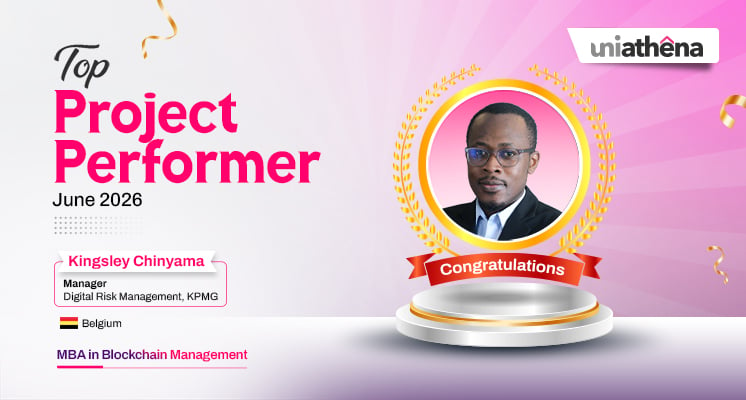
🌟 Top Project Performer – June 2026 🌟
Read More
1
mins read

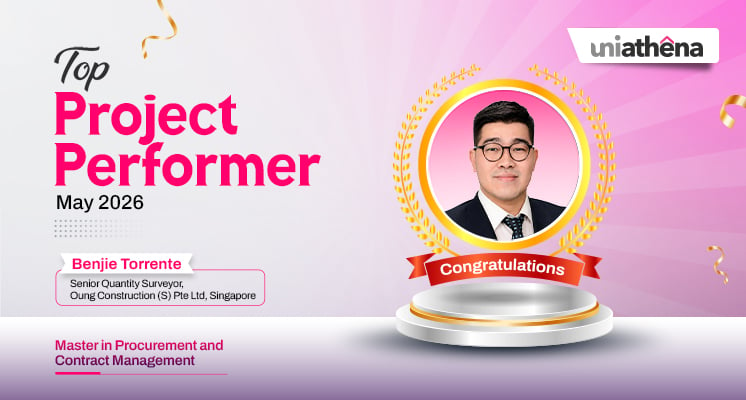
🌟 Top Project Performer – May 2026 🌟
Read More
1
mins read

Top Cybersecurity Courses in Ghana
Read More
7
mins read
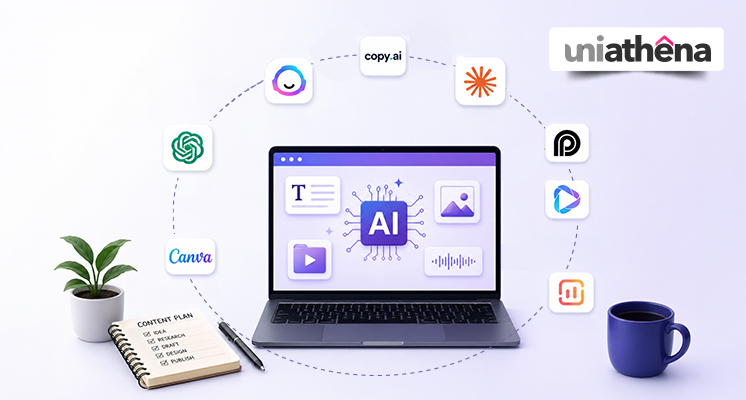
Best AI Tools for Content Creation
Read More
8
mins read
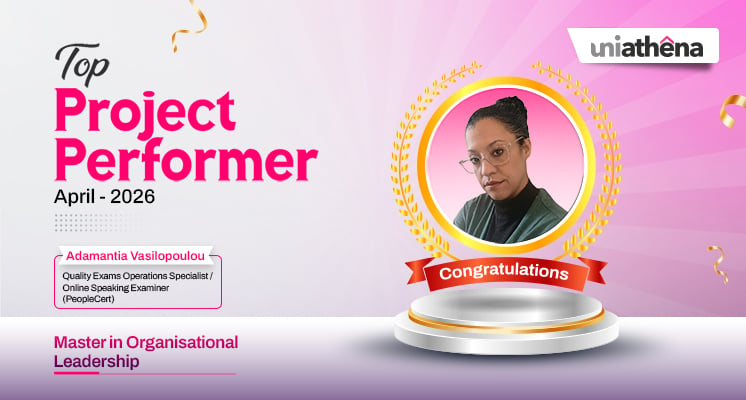
🌟 Top Project Performer – April 2026 🌟
Read More
1
mins read
What Is Grok AI?
Read more
9
mins read
🌟 Top Project Performer – June 2026 🌟
Read more
1
mins read
🌟 Top Project Performer – May 2026 🌟
Read more
1
mins read
Top Cybersecurity Courses in Ghana
Read more
7
mins read
Best AI Tools for Content Creation
Read more
8
mins read
🌟 Top Project Performer – April 2026 🌟
Read more
1
mins read
Get in Touch

It’s Time to Start
Join NowMost Popular Online Specialization
- Master of International Business Administration
- Master of Business Administration
- MBA in General Management- FastTrack
- Master in Innovation and Entrepreneurship
- MBA-Family Business Management
- Master in Procurement and Contract Management
- Extended Diploma in Business Analytics (SCQF Level 11)
- Diploma in Supply Chain and Logistics Management (SCQF Level 11)
- Strategic Human Resource Management Practitioner
- Master in Data Science
- Master in Engineering Management
Trending Online
- Integrated Doctorate of Business Administration
- Postgraduate Certificate in Finance for Next Generation Managers
- Master of Business Administration- General Management (Fast Track)
- Postgraduate Certificate in Socio-Economic and Legal Framework
- Postgraduate Certificate in Business Sustainability
- Certified Manager
- Supply Chain Management Practitioner
- MBA - AI in Business
- MBA - Accounting & Finance
- Master in Supply Chain and Logistics Management
Top Universities Online Certificates
- Postgraduate Certificate in International Marketing Management
- Postgraduate Certificate In International Human Resource Management
- Postgraduate Certificate in Strategic Management
- Postgraduate Certificate in Procurement & Contracts Management
- Postgraduate Certificate in Business Analytics
- Postgraduate Certificate in Strategic Supply Chain & Logistics Management
- Postgraduate Certificate in Human Resource and Leadership
- Project Management Practitioner
- Postgraduate Certificate in Supply Chain Design & Implementation
- Postgraduate Certificate in Management Accounting and Finance
Accredited Online Degree Program
- MBA - Digital Transformation
- MBA - Family Business Management
- MBA - Marketing Management
- MBA in Quality Management
- MBA - Business Intelligence & Data Analytics
- MBA in Operations & Project Management
- MBA in Energy Management
- MBA In Construction & Safety Management
- Master in Organisational Leadership
- Master in Public Health
- Master in Construction Management
- Bachelor of Arts in Business Administration


 Install Now


UniAthena is an Ed-Tech, offering flexible, affordable learning solutions, including Free-Learning Upskilling Courses and Academic Programs in partnerships with accredited and globally renowned universities and professional qualification bodies.


Do you have any questions ?
Feel free to send us your questions or request a free consultation
Send a message
UK
Athena Global Education
Magdalen Centre,
Robert Robinson Avenue,
Oxford, OX4 4GA, UK
Phone : 01865 784299
MIDDLE EAST
Athena Global Education FZE
Block L-03, First Floor,
P O Box 519265, Sharjah Publishing City,
Free Zone, Sharjah, UAE
Phone : +971 55 879 5492
INDIA
Uniathena Private Limited
9A,Midas Tower
Phase 1
Hinjewadi Rajiv Gandhi Infotech Park
Pune-411057
Phone: +91 9145665544
All Copyrights Reserved @ Athena Global Education 2021-2026