-

Bachelor's

-

Masters
-

MBA
-

Doctorate
-

Micro Credit
-

Explore all Courses
-
Postgraduate Certifications

-
Postgraduate Diploma
-
Undergraduate Diploma
-
Diploma



How IT is Boosting Agricultural Productivity in Africa?

Author: omkar hankare
|6
MINS READ
| 0
| 265
Created On: 20 August, 2024
Share




Being the primary source of livelihood to a majority of the population, Agriculture has a long history of being at the forefront in the African economy. IT plays a major role in increasing agricultural productivity in Africa through a good number of innovative solutions and approaches.
The blog will talk about how IT is increasing agricultural productivity in Africa amidst challenges such as limited market access and infrastructure gaps. We will cover precision farming, mobile apps, and data-driven initiatives that empower farmers with better tools, link them to markets, and enhance crop yields, leading to sustainable growth in the agricultural sector.
Challenges Facing Small-Scale Farmers:
Access to Markets and Technology:
The small-scale farmers, who are actually the backbone of African agriculture, have lesser access to markets beyond their immediate localities. They also lack contact with irrigation facilities and advanced technologies for farming, which could help increase output.
Infrastructure Gap:
The second biggest casualty that hits agricultural productivity hard in Africa is an infrastructure deficit. Poor road, rail, and harbour infrastructure adds an extra 30 to 40 percent to the cost of goods traded among African countries. Furthermore, less than 10 percent of the projects in infrastructure attain financial close in Africa—showing a critical bottleneck in development efforts.
Opportunities for Improvement:
Despite the challenges outlined above, there are obvious opportunities to transform Africa's agricultural productivity with the help of IT, such as:
- Precision Farming: IT enables precision farming techniques, wherein the farmer can optimally use his water, fertiliser, and pest management based on the real-time data that sensors and drones gather. This ensures an increase in crop yield and decrease in wastage.
- Mobile Applications: Farmers' access to key information on weather forecasts, market prices, and good farming practices has been enhanced through mobile applications designed for farmers. Apps like Farmforce and Esoko facilitate the connection of buyers to farmers, thus enhancing market access and price transparency.
- Remote Sensing and GIS: These Geographic Information Systems (GIS) and Remote Sensing Technologies help in mapping and monitoring agriculture lands, soil typing, and assessment of crop health. This information aids in planning and the respective decision-making processes.
Precision Farming Technologies
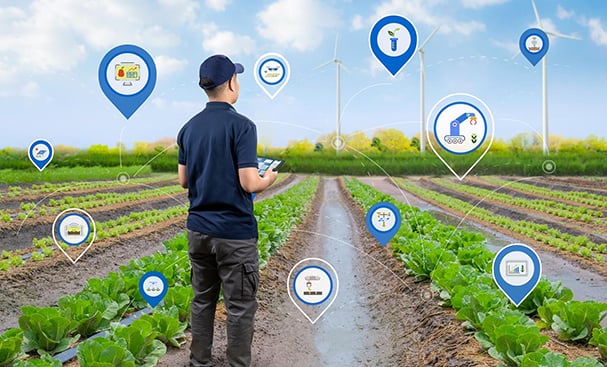
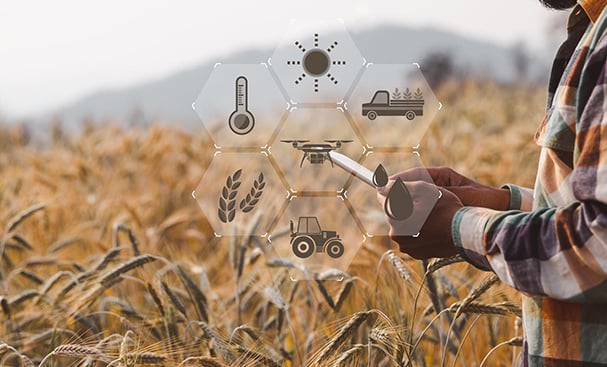
Precision farming technologies diffuse very fast in Africa, with the aim of increasing agricultural productivity, sustainability, and profitability. Digital tools and data analytics power these technologies in optimizing farming practices for better resource use, thus improving crop yields. Some of these precision farming technologies adopted in Africa include:
Drones and Remote Sensing
- Use Case: Equipped with sensors and cameras, drones are used for crop monitoring, mapping, and surveying large areas in agriculture. They can detect plant health issues, assess soil conditions, and identify irrigation needs, thus letting the farmer take remedial action in a focused manner.
- Example: Astral Aerial Solutions, a company in Kenya, offers such services with drones in precision agriculture to provide high-resolution imagery and data analysis that aids farmers in optimizing water usage and fertilizer application.
GPS and GIS Technologies
- Use Case: GPS technology, in conjunction with Geographic Information Systems, is utilized for accurate field mapping, yield monitoring, and variable rate application of fertilizers and pesticides. This makes sure that resources are only applied where required, reducing waste and the potential for environmental harm.
- Example: In South Africa, farmers make use of GPS-guided tractors for precise planting and harvesting, thereby greatly improving efficiency and reducing labor costs.
IoT Sensors and Smart Farming Devices
- Use Case: Real-time status of the moisture, temperature, pH levels, and nutrient content in the soil are monitored by IoT sensors deployed in the field to drive decisions on irrigation scheduling and fertilizer application. This ensures efficient use of available water and nutrients.
- Example: Zenvus, a Nigerian agri-tech company, offers smart farming solutions using electronic sensors buried in the soil, which collect data on moisture, nutrients, and temperature, advising farmers when best to water and fertilise the soil.
Mobile Applications and Platforms
- Use Case: Mobile applications provide real-time weather forecasts, market prices, and best practice agricultural advice to each farmer for his crops and area. They also provide a platform linking farmers to buyers, input suppliers, and extension services.
- Example: Farmforce, operational in East Africa, deploys mobile technology to get smallholder farmers' produce to market and delivers traceability solutions in agricultural commodities.
Artificial Intelligence and Machine Learning
- Use Case: AI and ML algorithms decode tremendous agricultural data to forecast yields of crops, identify diseases at their nascent stages, and recommend the best growing practices. These technologies power predictive analytics, thereby aiding farmers in making correct decisions.
- Example: Microsoft's effort, FarmBeats, uses AI and ML to analyze data captured from IoT sensors and satellites to derive actionable insights for farmers in countries like Nigeria.
Solar-Based Irrigation Systems
- Use Case: Solar-powered irrigation systems, coupled with IoT technology, automate the watering schedule in relation to real-time weather data and soil moisture levels to ensure that the crops obtain an optimal amount of water.
- Example: SunCulture of Kenya provides solar-powered irrigation kits that include IoT sensors to monitor soil moisture levels. This significantly reduced the amount of water used and resulted in an increase in crop yields.
Mobile Applications for Agricultural Productivity
Mobile applications are now speedy tools in efforts toward making markets better for small-scale farmers in Africa. These apps link farmers directly to buyers, show real-time market prices, and in some cases, even facilitate transactions, breaking the jinx of dependency on middlemen and hence improving farmers' earnings. Here are several successful examples:
Farmcrowdy—Nigeria
Farmcrowdy is an online agricultural platform that connects small-scale farmers to farm sponsors. The produce is sold after harvest to waiting buyers who ensure that these farmers sell at good prices. The application also offers access to high-quality farm inputs and training on more modern ways of farming.
Twiga Foods — Kenya
Twiga Foods runs a mobile-based supply platform that links smallholder farmers in rural areas to informal retail vendors in urban areas. Twiga, through aggregation of demand and streamlining logistics, ensures better prices for farmers' produce while giving retailers consistent quality and reliability of delivery.
M-Farm, Kenya
M-Farm packages a range of services to the farmers, thereby putting together market prices, farm inputs, and an e-marketplace where farmers can sell and buy from. Real-time prices of the produce are provided to farmers in different markets, thus guiding decisions on where to sell at better prices.
Esoko, Ghana
Esoko provides a hub where farmers can access current market prices via SMS. It also hosts marketplace capabilities so that farmers can post their produce directly to buyers. More than that, it helps in getting agricultural tips and weather forecasts to drive the decision-making process.
AgriMarketplace, Uganda
AgriMarketplace is a mobile and web-based marketplace that connects farmers to buyers, financial institutions, and agro-input suppliers. It minimizes post-harvest losses among farmers and improves their income through increased access to markets, as well as to financial services of relevance to small-scale farmers.
Microsoft’s Investments in African Agriculture:
Microsoft is working actively with the ministries in Kenya, Nigeria, South Africa, and Egypt to drive impact in agriculture—from intelligent crop detection to water demand forecasting, promoting good agricultural practices. This would ensure data sharing between agricultural entities and enable the collection of data through agricultural IoT sensors.
Microsoft has also commissioned research to identify opportunities that exist within the industry to make farming more efficient and cost-effective. These include mobile platforms that give farmers access to information on the diagnosis of pests and soils, market prices, and other relevant personalized recommendations that can help maximize their yields.
Conclusion
Despite the overwhelming productivity challenges facing African agriculture, the infusion of IT solutions provides a promising path to overcome them. Through increased access to markets, best farming practices, and financial innovation, IT can indeed make significant contributions to raising agricultural productivity on the continent.
Explore Related Courses












COMMENTS(0)
Explore Related Courses
Our Popular Insights
Careers are shifting faster than ever, and staying relevant takes more than experience. Explore UniAthena’s most-read blogs for sharp insights, emerging skills, and practical pathways that help you move forward with clarity and confidence in a changing professional world.

What is the usage of Power BI?
Read More
5
mins read





How to Switch Career to Data Analytics?
Read More
6
mins read

What is the usage of Power BI?
Read more
5
mins read
How to Switch Career to Data Analytics?
Read more
6
mins read

Get in Touch

It’s Time to Start
Join NowMost Popular Online Specialization
- Master of International Business Administration
- Master of Business Administration
- MBA in General Management- FastTrack
- Master in Innovation and Entrepreneurship
- MBA-Family Business Management
- Master in Procurement and Contract Management
- Extended Diploma in Business Analytics (SCQF Level 11)
- Diploma in Supply Chain and Logistics Management (SCQF Level 11)
- Strategic Human Resource Management Practitioner
- Master in Data Science
- Master in Engineering Management
Trending Online
- Integrated Doctorate of Business Administration
- Postgraduate Certificate in Finance for Next Generation Managers
- Master of Business Administration- General Management (Fast Track)
- Postgraduate Certificate in Socio-Economic and Legal Framework
- Postgraduate Certificate in Business Sustainability
- Certified Manager
- Supply Chain Management Practitioner
- MBA - AI in Business
- MBA - Accounting & Finance
- Master in Supply Chain and Logistics Management
Top Universities Online Certificates
- Postgraduate Certificate in International Marketing Management
- Postgraduate Certificate In International Human Resource Management
- Postgraduate Certificate in Strategic Management
- Postgraduate Certificate in Procurement & Contracts Management
- Postgraduate Certificate in Business Analytics
- Postgraduate Certificate in Strategic Supply Chain & Logistics Management
- Postgraduate Certificate in Human Resource and Leadership
- Project Management Practitioner
- Postgraduate Certificate in Supply Chain Design & Implementation
- Postgraduate Certificate in Management Accounting and Finance
Accredited Online Degree Program
- MBA - Digital Transformation
- MBA - Family Business Management
- MBA - Marketing Management
- MBA in Quality Management
- MBA - Business Intelligence & Data Analytics
- MBA in Operations & Project Management
- MBA in Energy Management
- MBA In Construction & Safety Management
- Master in Organisational Leadership
- Master in Public Health
- Master in Construction Management
- Bachelor of Arts in Business Administration


 Install Now


UniAthena is an Ed-Tech, offering flexible, affordable learning solutions, including Free-Learning Upskilling Courses and Academic Programs in partnerships with accredited and globally renowned universities and professional qualification bodies.


Do you have any questions ?
Feel free to send us your questions or request a free consultation
Send a message
UK
Athena Global Education
Magdalen Centre,
Robert Robinson Avenue,
Oxford, OX4 4GA, UK
Phone : 01865 784299
MIDDLE EAST
Athena Global Education FZE
Block L-03, First Floor,
P O Box 519265, Sharjah Publishing City,
Free Zone, Sharjah, UAE
Phone : +971 55 879 5492
INDIA
Uniathena Private Limited
9A,Midas Tower
Phase 1
Hinjewadi Rajiv Gandhi Infotech Park
Pune-411057
Phone: +91 9145665544
All Copyrights Reserved @ Athena Global Education 2021-2026