-

Bachelor's

-

Masters
-

MBA
-

Doctorate
-

Micro Credit
-

Explore all Courses
-
Postgraduate Certifications

-
Postgraduate Diploma
-
Undergraduate Diploma
-
Diploma



The Future is Green: Energy-Smart Blockchain Protocols Powering Carbon-Neutral Growth

Author: pallavi patnaik
|5
MINS READ
| 0
| 168
Created On: 08 October, 2025
Share




In 2022, Bitcoin miners were consuming electricity at an astonishing rate, enough to surpass the entire energy consumption of a country like Argentina, totaling more than 115 terawatt-hours per year and rivaling the output of many world economies. The environmental alarm bells rang loud, sparking tense debates in boardrooms and governments as the reality set in: blockchain, hailed as the future of transparency and trust, had become a major player in global energy usage.
Then, a pivotal shift began. By 2024, visionary leaders and innovators were determined to turn the tide, rewriting the rules of blockchain itself. They championed a new generation of protocols, most notably Proof-of-Stake, which slashed energy consumption by a staggering 99.95%.
What once seemed an unsolvable dilemma turned into a showcase for ingenuity and purpose. Rather than merely symbolic or PR-driven efforts, these initiatives reflected a profound transformation, as the blockchain community aligned with global climate goals and proved that technology could evolve to meet the demands of responsibility and sustainability. With this bold reinvention, blockchain entered a new era where progress and stewardship go hand in hand.
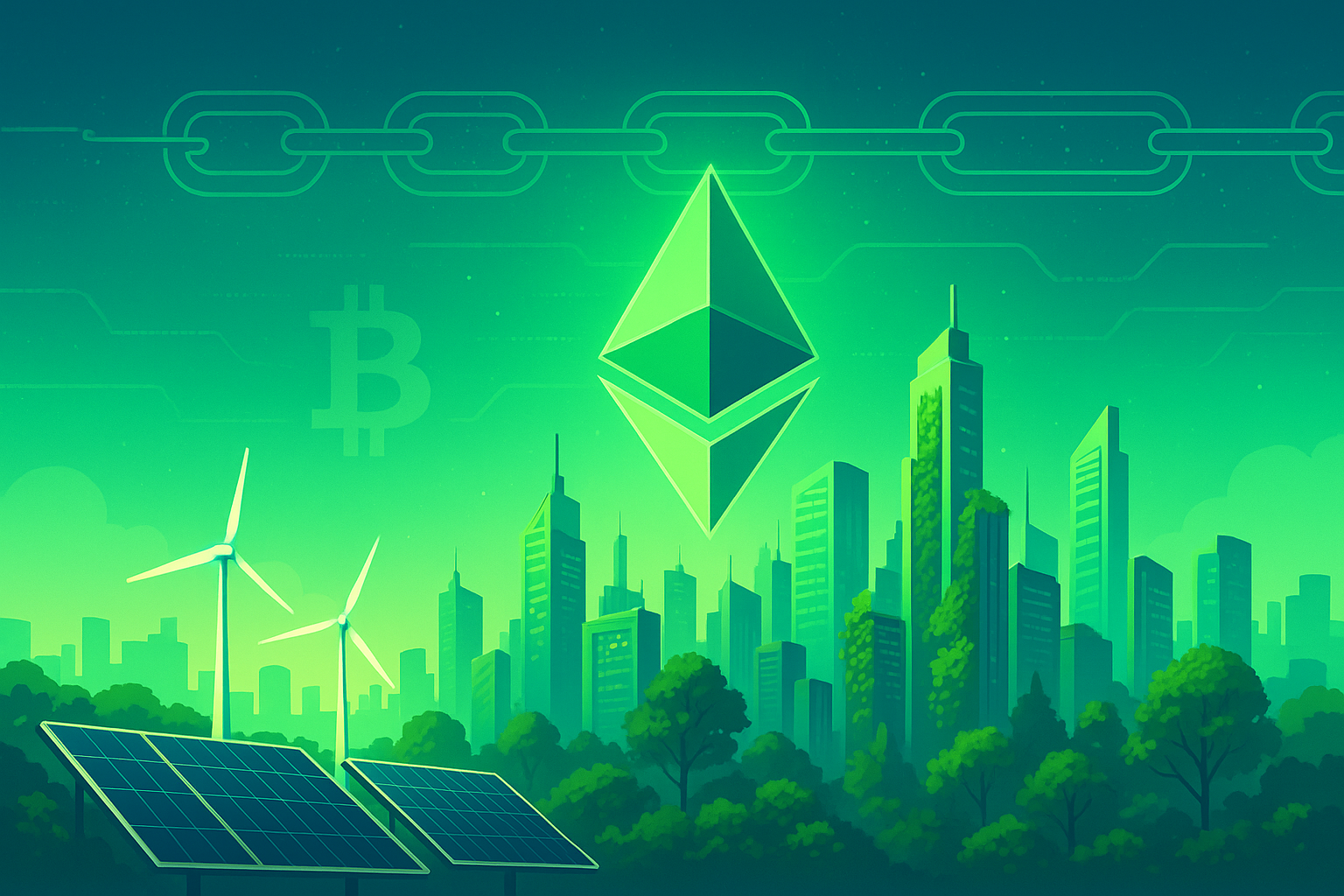
Blockchain: What Is It, and Why Does the Environment Matter?
At its core, blockchain technology is a decentralized digital ledger, securing transactions across networks without central control. It promises transparency, immutability, and trust, making it a foundation for next-gen finance, supply chains, and beyond.
But here’s the catch: traditional blockchain models, especially Proof-of-Work systems, carry a heavy environmental impact. Massive energy requirements translate into greenhouse gas emissions, putting pressure on enterprises and policymakers to rethink how these systems operate [1].
The question is no longer “blockchain, what is it?” but rather: how do we make it sustainable?
Why Is the Industry Turning Green?
The pivot toward green blockchain technology isn’t optional; it’s essential. Key drivers include:
- Regulatory Pressure: Governments are setting carbon-neutral targets. Non-compliance risks fines and reputational damage.
- Investor Demands: ESG (Environmental, Social, Governance) priorities are driving capital toward sustainable blockchain projects.
- Competitive Advantage: Adopting the greenest blockchain models signals leadership and responsibility to customers and partners.
As one CIO in renewable energy put it: “Sustainability is no longer an add-on. It’s the strategy.”
How Green Solutions Are Transforming the Industry
The shift isn’t theoretical; it’s practical. Today’s green blockchain protocols and consensus mechanisms are delivering tangible impact:
- Proof-of-Stake (PoS) replaces energy-heavy mining with validator staking, reducing consumption by up to 99% [2].
- Layer 2 Solutions scale efficiently by moving transactions off the main chain.
- Carbon Offset Integration automatically balances emissions with verified credits.
- Hybrid Consensus Models combine security and efficiency for next-gen blockchain use cases.
These modern solutions represent the greenest blockchain protocols available today, combining efficiency with security to redefine what sustainable blockchain technology can achieve. These technologies are more than energy-saving tactics; they are enabling carbon-neutral development across industries.
Also Read: Decoding Blockchain – What Every Business Leader Should Know
Benefits of Sustainable Blockchain
Organizations adopting sustainable blockchain models are realizing benefits that go beyond compliance:
- Lower Operational Costs: Reduced energy translates into significant savings.
- Resilient Brand Reputation: Green credentials build trust with eco-conscious stakeholders.
- Innovation Opportunities: A green future energy framework opens doors to new applications, from smart grids to carbon markets.
- Global Alignment: Supports international climate goals, reinforcing the role of blockchain in sustainability.
Case in point: Ethereum’s transition from Proof-of-Work to Proof-of-Stake cut its network energy consumption by more than 99% [1]. That’s not just efficiency, it’s reinvention.
Real-World Examples of Green Blockchain Protocols
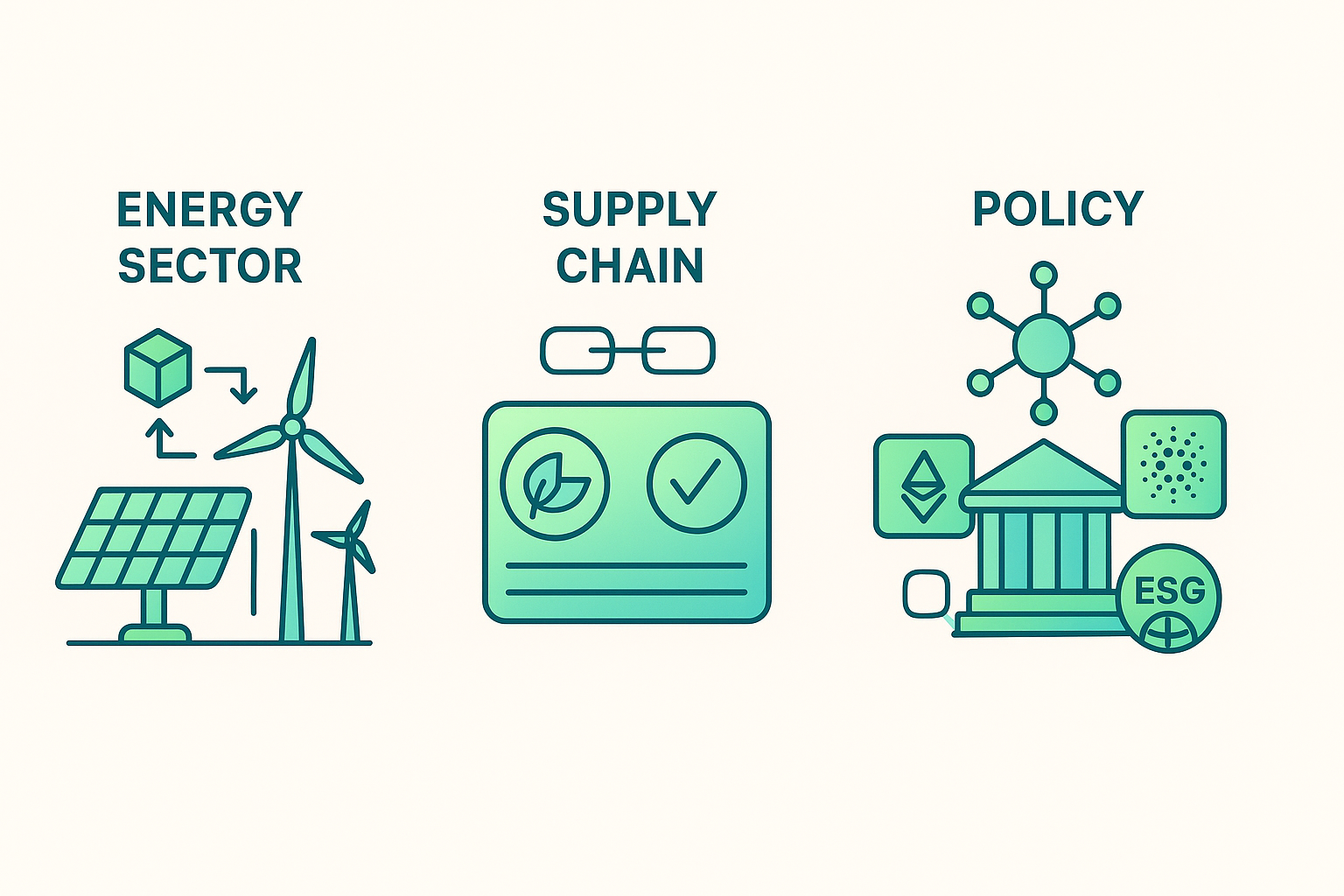
Energy Sector:
- Energy providers leverage blockchain to optimize and validate decentralized renewable grids, tracking clean energy from source to consumption in real time.
- Startups like Power Ledger facilitate peer-to-peer energy trading, allowing solar panel owners to sell surplus power, reducing reliance on fossil fuels.
Supply Chain:
- Blockchain ledgers verify carbon credits and green certifications, using immutable records to discourage tampering and ensure real-world environmental integrity.
Finance:
- Leading institutions deploy PoS-powered networks (Cardano, Ethereum) that minimize energy requirements and accelerate transaction speed, directly supporting ESG mandates.[3]
These stories move the conversation from theory to practice, energizing industries with sustainable blockchain advantages.
Also Read: Making the Future of Blockchain a Reality: 5 Industry Use Cases
Looking Ahead: The Future of Blockchain in Sustainability
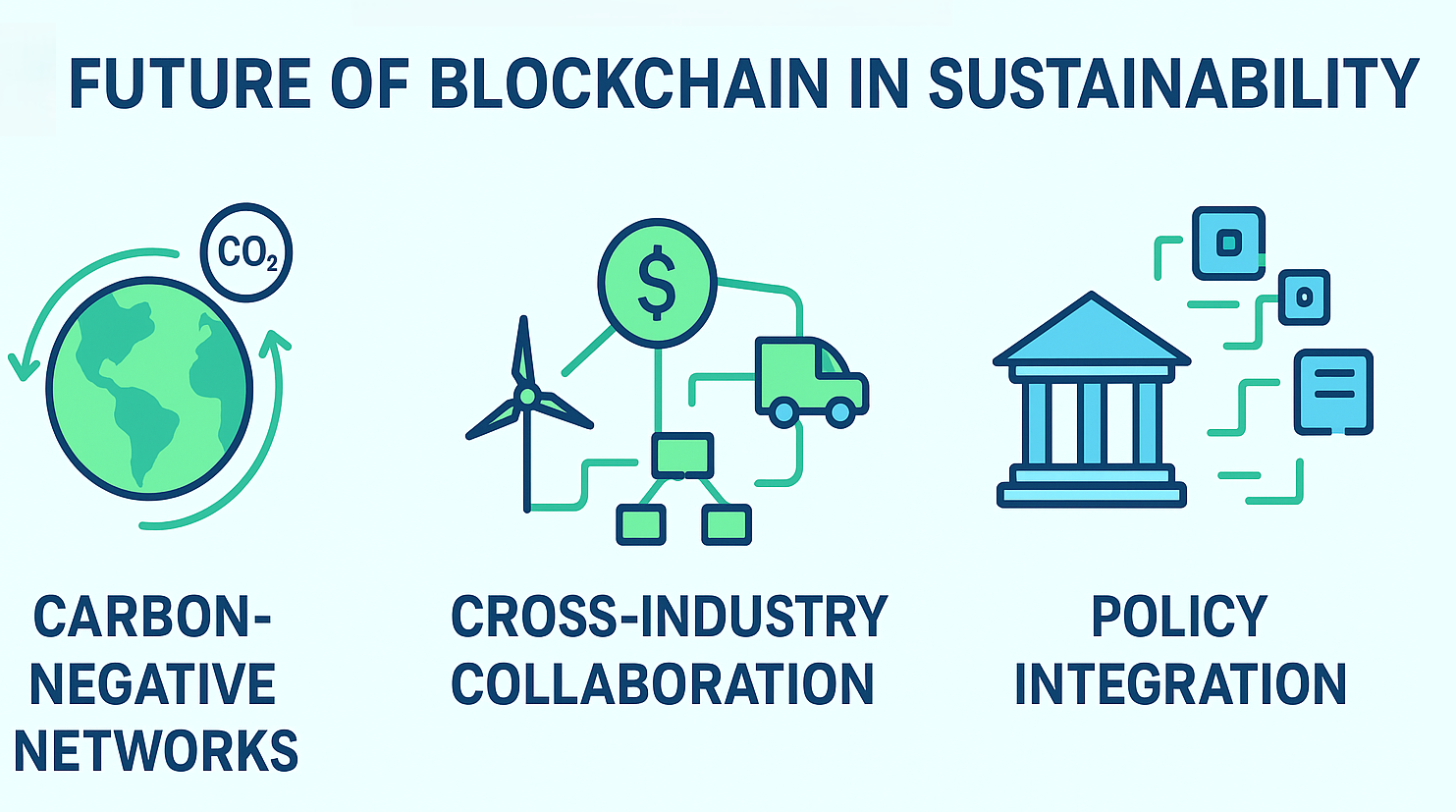
The journey toward a green blockchain future is only beginning. Expect three trends to define what’s next:
- Carbon-Negative Networks: Moving beyond neutral, protocols will actively remove CO₂ [2].
- Cross-Industry Collaboration: Shared platforms for tracking, reporting, and trading green assets.
- Policy Integration: Governments embedding blockchain technology into climate reporting frameworks [4].
This underscores the growing role of Blockchain in Sustainability as both a technological enabler and a leadership imperative for carbon-neutral development. Achieving sustainable blockchain impact requires both technological innovation and leadership commitment. Companies that embrace green blockchain technology now won’t just comply with regulations; they’ll help shape the standards of tomorrow.
Also Read: Must-Know Blockchain Platforms & Applications
Key Insight: Growth Without Compromise
The paradigm is clear: next-generation blockchain does not mean lower performance. On the contrary, energy-smart protocols deliver cost savings, enable rapid scaling, and align precisely with global climate goals. Blockchain’s green revolution is more than feasible; it’s already underway.
Sustainability is not a barrier, but the blueprint for growth. The future is green, enabled by blockchain protocols designed for carbon-neutral change.
References:
[1] Ethereum Foundation, “The Merge – Energy Reduction of 99.95%,” ethereum.org; Investopedia, “Ethereum Merge Explained.”
Available at:
https://www.nasdaq.com/articles/the-environmental-impact-of-blockchain-technology
[2] Arxiv, The Merge and Environmental Impact: 99.98% Energy Reduction; Wikipedia, “Proof of Stake – Energy Efficiency Studies.”
Available at:
https://ethereum.org/en/roadmap/merge/
[3] Wikipedia, “Cryptocurrency Energy Comparison – Bitcoin vs PoS Chains”; Cardano Ouroboros Protocol Energy Report.
Available at:
[4] Blockchain Technology News, “Exploring the Environmental Impact of Blockchain”; ResearchGate, Environmental Impact and Sustainability of Blockchain Technology; Financial News London, “Bitcoin Falls Behind Ethereum and Dogecoin in Crypto Sustainability.”
Available at:
Explore Related Courses












COMMENTS(0)
Explore Related Courses
Our Popular Insights
Careers are shifting faster than ever, and staying relevant takes more than experience. Explore UniAthena’s most-read blogs for sharp insights, emerging skills, and practical pathways that help you move forward with clarity and confidence in a changing professional world.






What is the Role of AI in Education?
Read More
4
mins read



What is the Role of AI in Education?
Read more
4
mins read
Get in Touch

It’s Time to Start
Join NowMost Popular Online Specialization
- Master of International Business Administration
- Master of Business Administration
- MBA in General Management- FastTrack
- Master in Innovation and Entrepreneurship
- MBA-Family Business Management
- Master in Procurement and Contract Management
- Extended Diploma in Business Analytics (SCQF Level 11)
- Diploma in Supply Chain and Logistics Management (SCQF Level 11)
- Strategic Human Resource Management Practitioner
- Master in Data Science
- Master in Engineering Management
Trending Online
- Integrated Doctorate of Business Administration
- Postgraduate Certificate in Finance for Next Generation Managers
- Master of Business Administration- General Management (Fast Track)
- Postgraduate Certificate in Socio-Economic and Legal Framework
- Postgraduate Certificate in Business Sustainability
- Certified Manager
- Supply Chain Management Practitioner
- MBA - AI in Business
- MBA - Accounting & Finance
- Master in Supply Chain and Logistics Management
Top Universities Online Certificates
- Postgraduate Certificate in International Marketing Management
- Postgraduate Certificate In International Human Resource Management
- Postgraduate Certificate in Strategic Management
- Postgraduate Certificate in Procurement & Contracts Management
- Postgraduate Certificate in Business Analytics
- Postgraduate Certificate in Strategic Supply Chain & Logistics Management
- Postgraduate Certificate in Human Resource and Leadership
- Project Management Practitioner
- Postgraduate Certificate in Supply Chain Design & Implementation
- Postgraduate Certificate in Management Accounting and Finance
Accredited Online Degree Program
- MBA - Digital Transformation
- MBA - Family Business Management
- MBA - Marketing Management
- MBA in Quality Management
- MBA - Business Intelligence & Data Analytics
- MBA in Operations & Project Management
- MBA in Energy Management
- MBA In Construction & Safety Management
- Master in Organisational Leadership
- Master in Public Health
- Master in Construction Management
- Bachelor of Arts in Business Administration


 Install Now


UniAthena is an Ed-Tech, offering flexible, affordable learning solutions, including Free-Learning Upskilling Courses and Academic Programs in partnerships with accredited and globally renowned universities and professional qualification bodies.


Do you have any questions ?
Feel free to send us your questions or request a free consultation
Send a message
UK
Athena Global Education
Magdalen Centre,
Robert Robinson Avenue,
Oxford, OX4 4GA, UK
Phone : 01865 784299
MIDDLE EAST
Athena Global Education FZE
Block L-03, First Floor,
P O Box 519265, Sharjah Publishing City,
Free Zone, Sharjah, UAE
Phone : +971 55 879 5492
INDIA
Uniathena Private Limited
9A,Midas Tower
Phase 1
Hinjewadi Rajiv Gandhi Infotech Park
Pune-411057
Phone: +91 9145665544
All Copyrights Reserved @ Athena Global Education 2021-2026