-

Bachelor's

-

Masters
-

MBA
-

Doctorate
-

Micro Credit
-

Explore all Courses
-
Postgraduate Certifications

-
Postgraduate Diploma
-
Undergraduate Diploma
-
Diploma



Must-Know Blockchain Platforms & Applications in 2025
Author: neha mondal
|6
MINS READ
| 0
| 255
Created On: 30 July, 2025
Share




Blockchain technology has come a long way from its early days; it's now genuinely changing how we conduct business, manage money, and even engage with digital entertainment. If you've been hearing about blockchain platforms and wondering what all the buzz is about, you're in the right place.
Let's dive into what's actually happening in the blockchain world in 2025 and why it matters to you.
What is Blockchain Technology?
Most of us are already familiar with this term. But let's start with a very simple definition.
Blockchain is basically a digital ledger used to record financial data and transactions across a number of computers, so that tampering with the transactions and making unauthorized changes becomes extremely difficult. Such a thing is like an open record book, which everyone can see, where no changes can be made without consensus from the network.
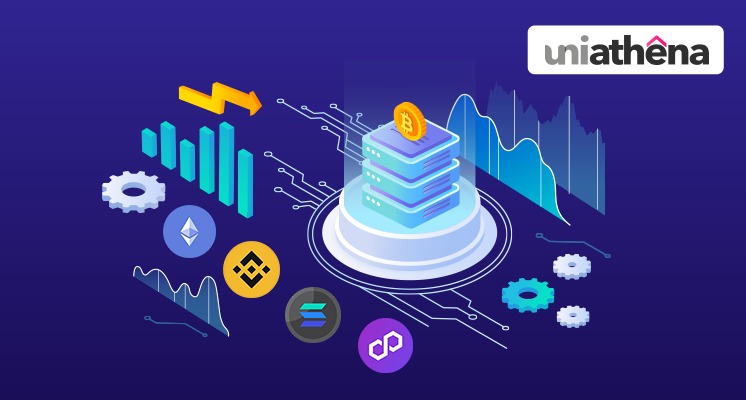
Top Blockchain Platforms in 2025
So, without any delay, we'll go ahead and start with the main agenda of this blog, exploring the blockchain platforms that are actually making waves in 2025. When people ask, "Which is the best blockchain?" The straight answer is that it depends on what you are trying to achieve.
However, there are a few stars that have been outstanding and gained most of the attention this year.
Ethereum:
A global leader in smart contracts, driving the bulk of DeFi (Decentralised Finance) projects, NFTs (Non-Fungible Tokens), and various supply chain tracking projects. Although it has been struggling with high costs and scalability, current advances and Layer 2 projects are actively addressing these issues.
Solana:
Solana has gone down in history due to its low transaction costs and fast speed. It is very popular in high-frequency trading applications and blockchain-based gaming. Its efficient processing of thousands of transactions per second offers a faster user experience for crypto wallet applications.
Polygon:
An important layer-2 scaling solution for Ethereum, designed to address Ethereum’s scalability limitations by enabling faster and more cost-effective transactions. Many developers use Polygon to enhance performance while leveraging Ethereum’s security.
Binance Smart Chain (BSC):
A decent option, having medium prices with moderate speed. It has assumed the status of a well-liked DeFi platform that pursues more extensive user adoption.
Also Read: 7 Reasons to Learn Blockchain Basics
Real-Life Blockchain Use Case
The "future" of blockchain is already here, optimising major industries and thriving across diverse sectors:
1. Finance and Banking:
- Ripple: This blockchain-based application streamlines international transactions by eliminating intermediaries, making cross-border payments faster and significantly cheaper. Financial institutions are actively leveraging Ripple to enhance their global payment infrastructure.
- BanQ: Addressing financial inclusion, BanQ provides microloan services to underserved populations, leveraging blockchain to offer accessible financial solutions where traditional banking might fall short.
2. Supply Chain Management & Logistics:
- IBM Food Trust: A leader in supply chain transparency, this platform ensures consumers receive high-quality produce by offering end-to-end tracing from the farm to the customer. This not only guarantees food quality but also ensures fair compensation for farmers.
- Oracle.io: This application provides multi-level visibility across complex supply chain systems. Stakeholders can track shipments, monitor product conditions like temperature, and quickly detect and address issues, leading to more efficient and reliable logistics.
3. Healthcare:
- Medical Chain: Revolutionising medical record management, Medical Chain offers blockchain-based solutions that provide seamless and interoperable access to patient data. This enhances data security, reduces administrative burdens, and improves care coordination.
4. Arts, Entertainment & Intellectual Property:
- OpenSea: As the world's largest NFT marketplace, OpenSea has become a hub for digital art, gaming pieces, and collectables. It empowers users to browse, buy, sell, and even create NFTs, fundamentally changing how digital ownership and artistic value are perceived.
- Binded: Tackling the pervasive issue of piracy in the creative industry, Binded provides timestamping and encryption for digital content. This ensures that artists' work is protected and they are properly compensated, preserving intellectual property rights.
5. Governance & Public Services:
- Voatz: This mobile voting platform allows citizens to securely cast their votes during elections. Notably, the state of West Virginia was one of the first to pilot Voatz, implementing an encrypted biometric system to ensure the security and authenticity of the voting process.
6. Advertising:
- MadHive: In the advertising sector, MadHive provides advanced data solutions for digital marketers. By offering targeted audience reports and real-time tracking, advertisers gain a deeper understanding of their audience without compromising data privacy or integrity.
7. Philanthropy & Charity:
- BitGive: Bringing transparency to the world of charity, BitGive leverages Bitcoin to provide real-time project updates for philanthropic initiatives. This promotes accountability, ensures that donations are used effectively, and builds greater trust in the charitable process.
These examples illustrate that blockchain is not merely a "technology of the future" but a powerful tool already driving significant improvements and innovations across a wide array of real-world applications.
Popular Blockchain Applications and Ecosystems
In addition to the specific real-life implementations we have highlighted, there are also the broader genres of blockchain usage that are experiencing significant growth.
Decentralised finance apps, such as Uniswap, Aave, and Compound, have developed a parallel financial system where you can lend money, collateralize assets, earn interest, and trade, all without needing to interact with a bank. Popular crypto wallet applications like MetaMask and Trust Wallet make accessing these platforms as easy as using any mobile app.
Another area where blockchain is resolving real problems is digital identity. Applications such as Civic and SelfKey enable individuals to manage their details by using blockchain services. Your college degrees, certifications, and even your government-issued ID may be on a blockchain, and you decide what someone can or cannot see.
Gaming has become one of the most exciting frontiers for blockchain tech. Games like Axie Infinity and The Sandbox let players actually own their in-game items as NFTs, trade them across different games, and even earn real money by playing. Developers are building these new economic models, making them more accessible and easier with gaming platforms such as Immutable X.
Choosing the Right Platform
With hundreds of blockchain platforms available, the choice depends on specific needs:
- For DeFi and a wide range of applications, Ethereum and its Layer 2 solutions like Polygon are strong contenders.
- For high-speed applications, Solana is a leading choice.
- For enterprise-specific solutions, Hyperledger and BaaS offerings from cloud providers are more suitable.
The evolving multichain blockchain ecosystem allows platforms to become increasingly interoperable, enabling applications to operate across multiple blockchains and providing flexibility for developers and users.
Innovation, Not Without Its Challenges
As blockchain continues to transform industries, it's important to recognise that the journey hasn't been completely smooth. This is to be expected with any new and evolving technology. Some networks still face congestion during peak usage. There are ongoing discussions around governance and decentralisation. A few platforms are adjusting their incentive systems to prevent misuse. Questions around scalability and transaction costs also remain.
These challenges are not failures. They are signs of an ecosystem that is still growing and improving. They show the need for thoughtful adoption and responsible development. With active participation from users, developers, and organisations, blockchain will continue to advance in meaningful ways.
In conclusion, blockchain has matured into a practical and powerful technology. Its focus on transparency, decentralisation, and user control is already reshaping industries. Understanding these platforms and their applications is essential for anyone navigating the digital landscape in 2025.
Explore Related Courses













COMMENTS(0)
Explore Related Courses
Our Popular Insights
Careers are shifting faster than ever, and staying relevant takes more than experience. Explore UniAthena’s most-read blogs for sharp insights, emerging skills, and practical pathways that help you move forward with clarity and confidence in a changing professional world.

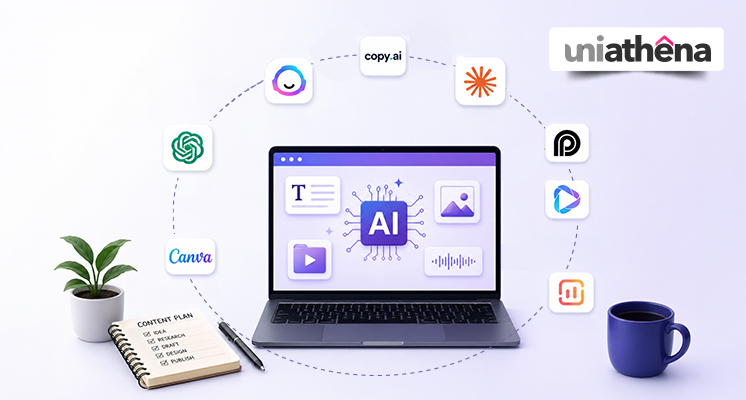
Best AI Tools for Content Creation
Read More
9
mins read

🌟 Top Project Performer – June 2026 🌟
Read More
1
mins read



🌟 Top Project Performer – May 2026 🌟
Read More
1
mins read


Best AI Tools for Content Creation
Read more
9
mins read
🌟 Top Project Performer – June 2026 🌟
Read more
1
mins read
🌟 Top Project Performer – May 2026 🌟
Read more
1
mins read
Get in Touch

It’s Time to Start
Join NowMost Popular Online Specialization
- Master of International Business Administration
- Master of Business Administration
- MBA in General Management- FastTrack
- Master in Innovation and Entrepreneurship
- MBA-Family Business Management
- Master in Procurement and Contract Management
- Extended Diploma in Business Analytics (SCQF Level 11)
- Diploma in Supply Chain and Logistics Management (SCQF Level 11)
- Strategic Human Resource Management Practitioner
- Master in Data Science
- Master in Engineering Management
Trending Online
- Integrated Doctorate of Business Administration
- Postgraduate Certificate in Finance for Next Generation Managers
- Master of Business Administration- General Management (Fast Track)
- Postgraduate Certificate in Socio-Economic and Legal Framework
- Postgraduate Certificate in Business Sustainability
- Certified Manager
- Supply Chain Management Practitioner
- MBA - AI in Business
- MBA - Accounting & Finance
- Master in Supply Chain and Logistics Management
Top Universities Online Certificates
- Postgraduate Certificate in International Marketing Management
- Postgraduate Certificate In International Human Resource Management
- Postgraduate Certificate in Strategic Management
- Postgraduate Certificate in Procurement & Contracts Management
- Postgraduate Certificate in Business Analytics
- Postgraduate Certificate in Strategic Supply Chain & Logistics Management
- Postgraduate Certificate in Human Resource and Leadership
- Project Management Practitioner
- Postgraduate Certificate in Supply Chain Design & Implementation
- Postgraduate Certificate in Management Accounting and Finance
Accredited Online Degree Program
- MBA - Digital Transformation
- MBA - Family Business Management
- MBA - Marketing Management
- MBA in Quality Management
- MBA - Business Intelligence & Data Analytics
- MBA in Operations & Project Management
- MBA in Energy Management
- MBA In Construction & Safety Management
- Master in Organisational Leadership
- Master in Public Health
- Master in Construction Management
- Bachelor of Arts in Business Administration


 Install Now


UniAthena is an Ed-Tech, offering flexible, affordable learning solutions, including Free-Learning Upskilling Courses and Academic Programs in partnerships with accredited and globally renowned universities and professional qualification bodies.


Do you have any questions ?
Feel free to send us your questions or request a free consultation
Send a message
UK
Athena Global Education
Magdalen Centre,
Robert Robinson Avenue,
Oxford, OX4 4GA, UK
Phone : 01865 784299
MIDDLE EAST
Athena Global Education FZE
Block L-03, First Floor,
P O Box 519265, Sharjah Publishing City,
Free Zone, Sharjah, UAE
Phone : +971 55 879 5492
INDIA
Uniathena Private Limited
9A,Midas Tower
Phase 1
Hinjewadi Rajiv Gandhi Infotech Park
Pune-411057
Phone: +91 9145665544
All Copyrights Reserved @ Athena Global Education 2021-2026