-

Bachelor's

-

Masters
-

MBA
-

Doctorate
-

Micro Credit
-

Explore all Courses
-
Postgraduate Certifications

-
Postgraduate Diploma
-
Undergraduate Diploma
-
Diploma



Smart but Trustworthy: Why AI Needs Blockchain
Author: lynn lawrence
|5
MINS READ
| 0
| 132
Created On: 26 February, 2026
Share




Table of Contents (TOC):
- Introduction
- Key Takeaways
- Understanding the Difference Between Blockchain and AI
- Why AI and Blockchain Integration Matter
- Real-World AI and Blockchain Use Cases
- How Blockchain Strengthens AI Trust
- Challenges in AI and Blockchain Integration
- The Future of AI and Blockchain Convergence
- Conclusion
- FAQs
Introduction
Artificial intelligence is transforming how decisions are made across industries. From recommending products to detecting fraud, AI systems are deeply embedded in our digital lives. However, one critical problem remains: trust. Users and organizations often don’t know where AI data comes from, how decisions are made, or whether outcomes are biased or manipulated.
This is where AI blockchain technology becomes highly relevant. By combining the intelligence of AI with the transparency and security of blockchain, organizations can build systems that are not only smart but also reliable. The integration of AI and blockchain directly addresses user concerns around data authenticity, accountability, and decision transparency.
Key Takeaways
- AI provides intelligence, while blockchain ensures trust and transparency.
- AI and blockchain integration help eliminate data tampering and bias.
. - Real-world AI and blockchain use cases are already active in finance and healthcare.
- Blockchain for AI improves explainability and accountability.
- AI and blockchain convergence are shaping the future of trusted digital systems.
Understanding the Difference Between Blockchain and AI
To understand why these technologies work well together, it’s important to first look at the difference between blockchain and AI.
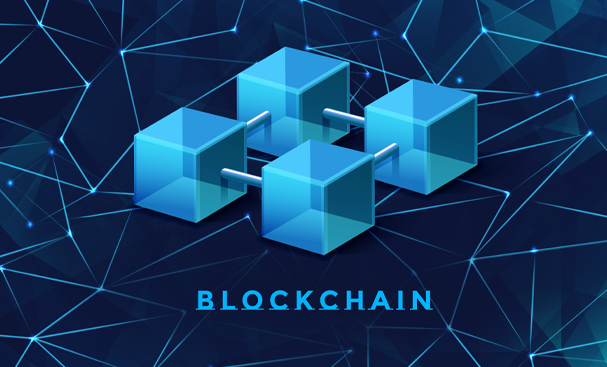
Blockchain is designed to securely record data in a decentralized and immutable way. Once information is stored on a blockchain, it cannot be altered without network consensus. This makes blockchain ideal for applications where data integrity and transparency are critical.
Artificial intelligence, on the other hand, focuses on learning from data to make predictions, recommendations, or automated decisions. AI systems improve over time, but their reliability depends entirely on the quality of the data they are trained on.
In simple terms, AI decides what action to take, while blockchain records why that action was taken. This complementary relationship forms the foundation of blockchain and artificial intelligence working together.
Why AI and Blockchain Integration Matter
One of the biggest challenges with AI is data trust. If training data is manipulated, biased, or incomplete, AI outcomes become unreliable. AI and blockchain integration help solve this by ensuring that data used by AI models is verified, traceable, and tamper-proof.
Blockchain creates a trusted data layer where every update is recorded and auditable. When AI systems operate on this verified data, decision-making becomes more transparent and defensible. This is especially important in industries where compliance and accountability are non-negotiable.
As a result, blockchain integration with AI improves confidence not just in AI outputs, but also in the entire decision-making process.
Also Read: How to Become a Blockchain Developer?
Real-World AI and Blockchain Use Cases
The practical value of AI and blockchain use cases can already be seen across multiple sectors.
In finance, AI models analyze transaction patterns to detect fraud, while blockchain ensures that transaction records remain unaltered. This combination improves fraud detection accuracy and reduces false positives, making AI and blockchain in finance a powerful solution.
In healthcare, patient data stored on blockchain remains secure and accessible only to authorized parties. AI systems can then analyze this trusted data to support diagnostics, treatment planning, and predictive care. These AI and blockchain in healthcare applications improve outcomes while protecting patient privacy.
Supply chain management also benefits significantly. Blockchain tracks product movement from origin to delivery, while AI predicts delays, demand fluctuations, and operational risks. Together, these technologies enhance transparency and efficiency—one of the most practical applications of blockchain technology today.
How Blockchain Strengthens AI Trust
A common concern with AI is its “black box” nature, where decisions are made but explanations are unclear. Blockchain for AI helps address this issue by recording how data is collected, how models are trained, and how decisions evolve over time.
This creates a clear audit trail for AI decisions, making systems easier to explain, regulate, and improve. In sensitive domains such as finance and healthcare, this level of transparency is essential for user trust and regulatory approval.
Challenges in AI and Blockchain Integration
Despite the benefits, blockchain and AI integration are not without challenges. Scalability remains a concern, as both technologies require significant computational resources. Data privacy regulations can also complicate decentralized data sharing.
However, ongoing research and hybrid models are helping organizations balance performance, privacy, and transparency, bringing AI and blockchain convergence closer to mainstream adoption.
Also Read: Decentralized AI: Training Models on Blockchain
The Future of AI and Blockchain Convergence
Looking ahead, AI and blockchain convergence are expected to power decentralized intelligence systems. These systems will enable secure data sharing, ethical AI governance, and autonomous decision-making with built-in accountability.
As trust becomes a competitive advantage, organizations that adopt blockchain integration with AI early will be better positioned to lead in data-driven innovation.
Conclusion
AI is powerful, but trust remains its weakest link. Blockchain provides the missing foundation by ensuring transparency, security, and accountability.
Together, AI blockchain technology creates intelligent systems that users can trust. As real-world blockchain and AI applications continue to grow, this integration will define the future of responsible digital transformation.
FAQs
Q1. What is AI and blockchain integration?
It refers to combining AI’s decision-making capabilities with blockchain’s secure and transparent data infrastructure.
Q2. What is the difference between blockchain and AI?
Blockchain focuses on data integrity and decentralization, while AI focuses on learning and intelligent automation.
Q3. Does blockchain use AI?
Blockchain does not require AI, but AI is increasingly used alongside blockchain for analytics, security, and automation.
Q4. Where are AI and blockchain used together?
Common sectors include finance, healthcare, supply chains, cybersecurity, and governance systems.
Q5. Why is blockchain important for AI?
Blockchain ensures data integrity and traceability, which are critical for building trustworthy AI systems.
Explore Related Courses







COMMENTS(0)
Explore Related Courses
Our Popular Insights
Careers are shifting faster than ever, and staying relevant takes more than experience. Explore UniAthena’s most-read blogs for sharp insights, emerging skills, and practical pathways that help you move forward with clarity and confidence in a changing professional world.







Get in Touch

It’s Time to Start
Join NowMost Popular Online Specialization
- Master of International Business Administration
- Master of Business Administration
- MBA in General Management- FastTrack
- Master in Innovation and Entrepreneurship
- MBA-Family Business Management
- Master in Procurement and Contract Management
- Extended Diploma in Business Analytics (SCQF Level 11)
- Diploma in Supply Chain and Logistics Management (SCQF Level 11)
- Strategic Human Resource Management Practitioner
- Master in Data Science
- Master in Engineering Management
Trending Online
- Integrated Doctorate of Business Administration
- Postgraduate Certificate in Finance for Next Generation Managers
- Master of Business Administration- General Management (Fast Track)
- Postgraduate Certificate in Socio-Economic and Legal Framework
- Postgraduate Certificate in Business Sustainability
- Certified Manager
- Supply Chain Management Practitioner
- MBA - AI in Business
- MBA - Accounting & Finance
- Master in Supply Chain and Logistics Management
Top Universities Online Certificates
- Postgraduate Certificate in International Marketing Management
- Postgraduate Certificate In International Human Resource Management
- Postgraduate Certificate in Strategic Management
- Postgraduate Certificate in Procurement & Contracts Management
- Postgraduate Certificate in Business Analytics
- Postgraduate Certificate in Strategic Supply Chain & Logistics Management
- Postgraduate Certificate in Human Resource and Leadership
- Project Management Practitioner
- Postgraduate Certificate in Supply Chain Design & Implementation
- Postgraduate Certificate in Management Accounting and Finance
Accredited Online Degree Program
- MBA - Digital Transformation
- MBA - Family Business Management
- MBA - Marketing Management
- MBA in Quality Management
- MBA - Business Intelligence & Data Analytics
- MBA in Operations & Project Management
- MBA in Energy Management
- MBA In Construction & Safety Management
- Master in Organisational Leadership
- Master in Public Health
- Master in Construction Management
- Bachelor of Arts in Business Administration


 Install Now


UniAthena is an Ed-Tech, offering flexible, affordable learning solutions, including Free-Learning Upskilling Courses and Academic Programs in partnerships with accredited and globally renowned universities and professional qualification bodies.


Do you have any questions ?
Feel free to send us your questions or request a free consultation
Send a message
UK
Athena Global Education
Magdalen Centre,
Robert Robinson Avenue,
Oxford, OX4 4GA, UK
Phone : 01865 784299
MIDDLE EAST
Athena Global Education FZE
Block L-03, First Floor,
P O Box 519265, Sharjah Publishing City,
Free Zone, Sharjah, UAE
Phone : +971 55 879 5492
INDIA
Uniathena Private Limited
9A,Midas Tower
Phase 1
Hinjewadi Rajiv Gandhi Infotech Park
Pune-411057
Phone: +91 9145665544
All Copyrights Reserved @ Athena Global Education 2021-2026