-

Bachelor's

-

Masters
-

MBA
-

Doctorate
-

Micro Credit
-

Explore all Courses
-
Postgraduate Certifications

-
Postgraduate Diploma
-
Undergraduate Diploma
-
Diploma



What Is the Growth Mindset & Why Employers Value It?

Author: aishwarya sancheti
|6
MINS READ
| 0
| 87
Created On: 04 February, 2026
Share




Table of Contents (TOC):
- Introduction
- Key Takeaways
- Growth Mindset Definition: More Than Just Positive Thinking
- Growth Mindset Meaning in Everyday Life
- Why This Mindset Matters More Than Ever
- Growth Mindset vs Fixed Mindset
- Different Types of Mindset (The 4 Types of Mindsets)
- Why Employers Value a Growth Mindset in the Workplace
- Benefits of Having a Growth Mindset
- Growth Mindset Characteristics Employers Look For
- How to Develop a Growth Mindset
- Growth Mindset Affirmations
- Conclusion
- FAQs
Introduction
A few years ago, having the right degree or years of experience was enough to feel secure. Today, that’s no longer true. Jobs are changing. Skills are expiring. Industries are evolving faster than people can plan.
You might notice it when:
- A new tool suddenly becomes “mandatory” at work
- A student realises textbook knowledge isn’t enough
- A homemaker returns to work after a break
- A freelancer struggles to keep up with trends
- A creator sees their reach drop overnight
In moments like these, success depends less on what you already know and more on how willing you are to learn. That ability is driven by one thing: mindset.
And among all mindsets, the one employers value most today is the growth mindset.“In a world that’s changing so quickly, the biggest risk you can take is not learning.”- Common insight echoed by business leaders across industries
Key Takeaways:
- A growth mindset is the belief that skills and abilities can be developed over time.
- Employers value mindset because skills change, but learning ability lasts.
- The difference between fixed and growth mindset determines how people respond to failure and change.
- Growth mindset helps students, professionals, homemakers, freelancers, and creators stay relevant.
- Organisations with growth-oriented employees adapt faster and innovate more.
- A growth mindset can be developed through small, consistent habits.
Growth Mindset Definition: More Than Just Positive Thinking
The growth mindset definition goes far beyond being optimistic or motivated. A growth mindset is the belief that intelligence, abilities, and skills can be developed over time through effort, learning, feedback, and persistence.
This idea comes from psychologist Dr. Carol Dweck, whose research showed that people who believe they can improve are more likely to:
- Take on challenges
- Learn from failure
- Adapt to change
- Succeed over the long term
So when people ask, “What is the growth mindset?”, the real answer is: It’s believing that who you are today is not who you must remain.
Growth Mindset Meaning in Everyday Life
In real life, growth mindset meaning shows up in simple, familiar thoughts:
- “I don’t know this yet, but I can learn.”
- “This didn’t work - what can I do better next time?”
- “Feedback isn’t criticism; it’s guidance.”
This mindset isn’t limited to schools or offices.
It shapes how students learn, how employees grow, how homemakers adapt, how freelancers survive, and how influencers stay relevant.
Why This Mindset Matters More Than Ever
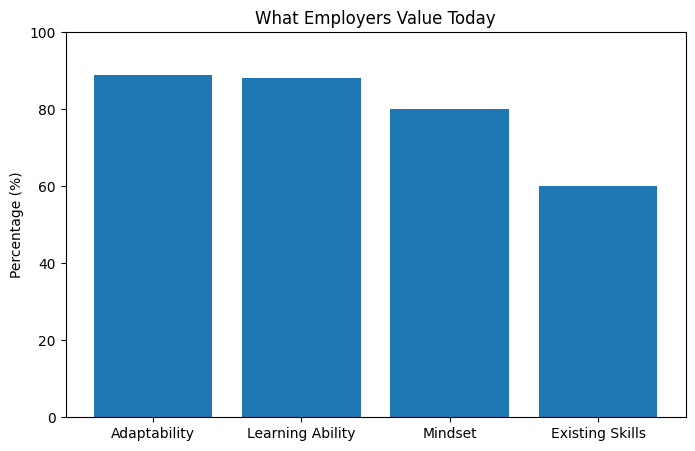
According to global workforce studies, employers now prioritise learning ability and adaptability over static knowledge. Roles are being redesigned faster than people can reskill. That’s why organisations increasingly focus on:
- Growth mindset in the workplace
- Employee mindset and adaptability
- Willingness to learn over existing expertise
In short, skills may get you hired but mindset determines how long you stay valuable.
Growth Mindset vs Fixed Mindset
Understanding the difference between fixed and growth mindset helps explain why some people grow faster than others.
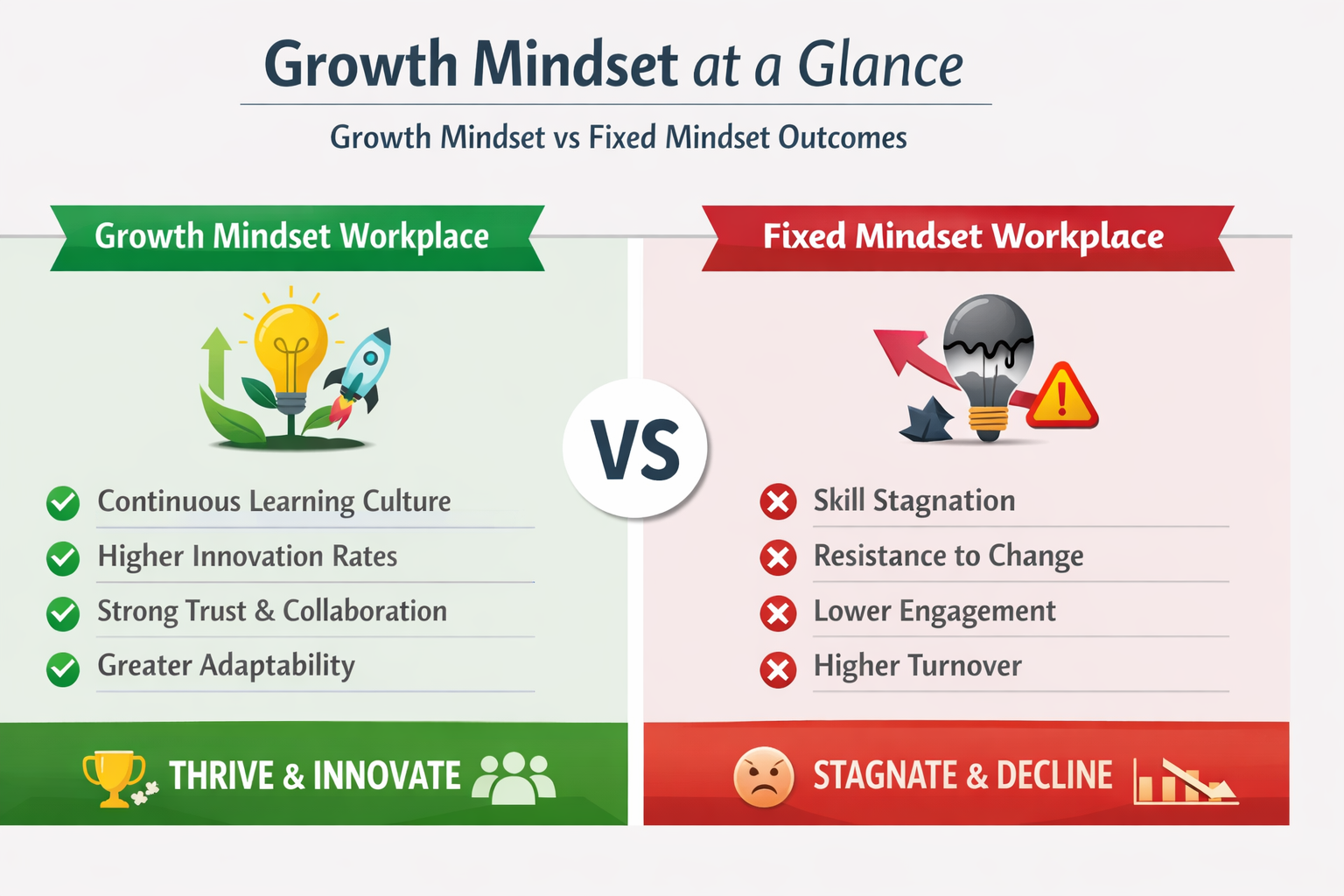
These are everyday fixed mindset examples and growth mindset examples at work that people experience daily.
Different Types of Mindset (The 4 Types of Mindsets)
Experts often talk about 4 types of mindsets that shape behaviour:
Why Employers Value a Growth Mindset in the Workplace
Degrees, job titles, and years of experience still matter but in a world that’s changing faster than ever, what truly determines long-term success is how you learn, adapt, and grow.
According to recent research:
- 88% of executives say a growth mindset is important for organizational success.
- 80% believe employees with a growth mindset directly contribute to revenue growth.
- 89% agree future business success depends on leaders who model a growth mindset.
In other words, employers aren’t just hiring skills, they’re hiring adaptability and potential.
Here’s a closer look at what this actually means in real workplaces: Real Company Examples: How Growth Mindset Plays Out
Microsoft:
CEO Satya Nadella shifted the culture from “know-it-all” to “learn-it-all,” encouraging employees to embrace experimentation and continuous improvement. This cultural shift is credited with driving greater collaboration, creativity, and relevance in a competitive tech landscape.
Google:
Teams are encouraged to pursue moonshot projects and high-impact experimentation, even if the outcome is uncertain. This not only fosters innovation but signals that risk-taking is rewarded, not punished.
IBM & Netflix:
These companies invest heavily in learning opportunities, mentorship, feedback-driven performance, and environments where mistakes become lessons, not liabilities.
These examples show that successful organisations don’t just tolerate a growth mindset, they engineer it into their DNA.
Want to develop a growth mindset and stand out in your career? Check out these relevant courses by UniAthena that help you build motivation, leadership, adaptability, and psychological insight, key traits employers look for in a growth-oriented employee.
1. Basics of Motivation and Leadership
2. Basics of Leadership Styles & Theories
3. Mastering Leadership for Change Management
4. Mastering Managerial Psychology
All these free and internationally certified programs help you through.
Benefits of Having a Growth Mindset (For Everyone)
The benefits of a growth mindset go beyond jobs and promotions.
For Individuals
- Confidence to try new things
- Less fear of failure
- Faster skill development
- Better emotional resilience
For Workplaces
- Stronger teams
- Better collaboration
- Continuous improvement culture
Simply put, the power of mindset shapes both success and satisfaction.
Growth Mindset Characteristics Employers Look For
When hiring or promoting, employers watch for:
- Curiosity
- Willingness to learn
- Accountability
- Adaptability
- Openness to feedback
These growth mindset characteristics often matter more than technical skills.
How to Develop a Growth Mindset (Practical & Realistic)
You don’t need motivation - speeches - just small habits.
10 Ways to Develop a Growth Mindset
1. Replace “I can’t” with “I’m learning”
2. Treat mistakes as data, not failure
3. Ask for feedback
4. Learn one new skill regularly
5. Stop comparing your journey
6. Focus on effort, not perfection
7. Try before judging yourself
8. Accept discomfort as growth
9. Reflect instead of blaming
10. Keep improving one step at a time
Growth Mindset Affirmations (Daily Use)
- “I am capable of learning.”
- “Progress matters more than perfection.”
- “Every effort counts.”
- “I grow with experience.”
Conclusion
Whether you’re a student, employee, homemaker, freelancer, or creator, your future depends less on where you start and more on how you grow.
That’s why employers value people with a growth mindset.
They don’t just keep up, they keep growing.
And in today’s world, growth is the real skill.
FAQs
Q1. What is the growth mindset?
A: A growth mindset is the belief that intelligence and skills can improve through effort, learning, and feedback.
Q2. What does a fixed mindset mean?
A: A fixed mindset assumes abilities are limited and cannot be changed.
Q3. What is the difference between fixed and growth mindset?
A: A fixed mindset avoids challenges, while a growth mindset learns from them.
Q4. Why do employers value a growth mindset?
A: Because employees with a growth mindset adapt faster, learn continuously, and stay valuable longer.
Q5. What are examples of a growth mindset at work?
A: Accepting feedback, learning new tools, and improving after failure.
Q6. What are the benefits of having a growth mindset?
A: Higher confidence, resilience, faster learning, and long-term success.
Q7. Can a growth mindset be developed?
A: Yes, through daily habits like learning from mistakes and focusing on progress.
Q8. How does a growth mindset help in career growth?
A: It helps individuals stay relevant, adaptable, and open to new opportunities.
Explore Related Courses











COMMENTS(0)
Explore Related Courses
Our Popular Insights
Careers are shifting faster than ever, and staying relevant takes more than experience. Explore UniAthena’s most-read blogs for sharp insights, emerging skills, and practical pathways that help you move forward with clarity and confidence in a changing professional world.


🌟 Students of the Month | May – June 2026 🌟
Read More
1
mins read





🌟 Students of the Month | May – June 2026 🌟
Read more
1
mins read
Get in Touch

It’s Time to Start
Join NowMost Popular Online Specialization
- Master of International Business Administration
- Master of Business Administration
- MBA in General Management- FastTrack
- Master in Innovation and Entrepreneurship
- MBA-Family Business Management
- Master in Procurement and Contract Management
- Extended Diploma in Business Analytics (SCQF Level 11)
- Diploma in Supply Chain and Logistics Management (SCQF Level 11)
- Strategic Human Resource Management Practitioner
- Master in Data Science
- Master in Engineering Management
Trending Online
- Integrated Doctorate of Business Administration
- Postgraduate Certificate in Finance for Next Generation Managers
- Master of Business Administration- General Management (Fast Track)
- Postgraduate Certificate in Socio-Economic and Legal Framework
- Postgraduate Certificate in Business Sustainability
- Certified Manager
- Supply Chain Management Practitioner
- MBA - AI in Business
- MBA - Accounting & Finance
- Master in Supply Chain and Logistics Management
Top Universities Online Certificates
- Postgraduate Certificate in International Marketing Management
- Postgraduate Certificate In International Human Resource Management
- Postgraduate Certificate in Strategic Management
- Postgraduate Certificate in Procurement & Contracts Management
- Postgraduate Certificate in Business Analytics
- Postgraduate Certificate in Strategic Supply Chain & Logistics Management
- Postgraduate Certificate in Human Resource and Leadership
- Project Management Practitioner
- Postgraduate Certificate in Supply Chain Design & Implementation
- Postgraduate Certificate in Management Accounting and Finance
Accredited Online Degree Program
- MBA - Digital Transformation
- MBA - Family Business Management
- MBA - Marketing Management
- MBA in Quality Management
- MBA - Business Intelligence & Data Analytics
- MBA in Operations & Project Management
- MBA in Energy Management
- MBA In Construction & Safety Management
- Master in Organisational Leadership
- Master in Public Health
- Master in Construction Management
- Bachelor of Arts in Business Administration


 Install Now


UniAthena is an Ed-Tech, offering flexible, affordable learning solutions, including Free-Learning Upskilling Courses and Academic Programs in partnerships with accredited and globally renowned universities and professional qualification bodies.


Do you have any questions ?
Feel free to send us your questions or request a free consultation
Send a message
UK
Athena Global Education
Magdalen Centre,
Robert Robinson Avenue,
Oxford, OX4 4GA, UK
Phone : 01865 784299
MIDDLE EAST
Athena Global Education FZE
Block L-03, First Floor,
P O Box 519265, Sharjah Publishing City,
Free Zone, Sharjah, UAE
Phone : +971 55 879 5492
INDIA
Uniathena Private Limited
9A,Midas Tower
Phase 1
Hinjewadi Rajiv Gandhi Infotech Park
Pune-411057
Phone: +91 9145665544
All Copyrights Reserved @ Athena Global Education 2021-2026