-

Bachelor's

-

Masters
-

MBA
-

Doctorate
-

Micro Credit
-

Explore all Courses
-
Postgraduate Certifications

-
Postgraduate Diploma
-
Undergraduate Diploma
-
Diploma



How Are Wearables Quietly Reshaping Workplace Risk Detection?
Author: aishwarya sancheti
|4
MINS READ
| 0
| 211
Created On: 26 August, 2025
Share




Late nights, endless video calls, and long hours at work – corporate life has its own hidden risks. Fatigue builds up silently, posture takes a toll, and stress levels rise long before HR notices a pattern. For organizations, these small, everyday issues often escalate into bigger problems: absenteeism, rising healthcare claims, and declining productivity.
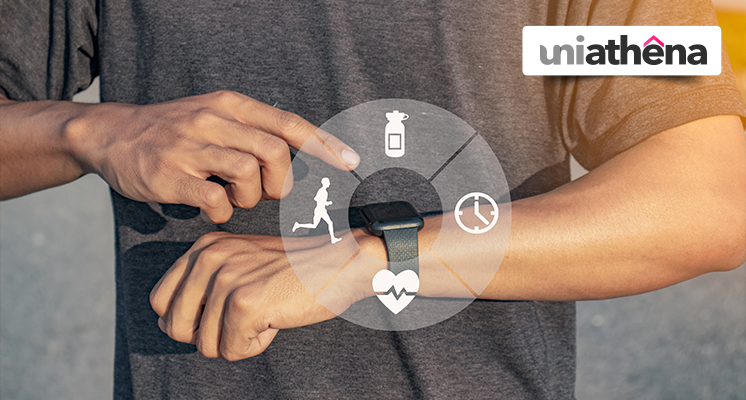
That’s where wearable devices are making a quiet difference. No longer just fitness trackers, today’s workplace safety wearables can detect early signs of stress, track posture, monitor fatigue, and even provide real-time alerts during emergencies. For companies, this means risk detection moves from reactive to proactive, protecting both people and performance.
The real question is: how are these tools reshaping the way corporate workplaces think about safety and well-being?
From Hard Hats to Headsets: A New Era of Workplace Risk Detection
Traditionally, risk detection was reactive, including incident reports, compliance audits, and after-action reviews. In the corporate environment, that often meant missed warning signs: rising employee stress, unnoticed burnout, or ergonomic strains that led to absenteeism.
Wearable technology flips the model. By continuously monitoring signals from movement and posture to heart rate variability, organizations gain a proactive safety net that complements existing risk management frameworks.
Consider:
- A consultant on international travel receives an automatic fatigue alert through a wearable health device.
- An employee’s smart badge detects proximity to restricted areas, reducing security risks.
- A posture tracker alerts a financial analyst to prolonged strain, preventing long-term musculoskeletal issues.
This isn’t science fiction; it’s the reality of workplace safety wearables.
Also Read: The Silent Shift: Why EHS Is the New Language of Corporate Integrity
Benefits of Wearable Technology in the Corporate Workplace
1. Enhancing Employee Well-Being
Wearable health monitoring devices track signs of stress, sleep deprivation, or sedentary behavior. This supports wellness programs while reducing the risk of burnout and associated turnover. In knowledge-driven sectors, preventing fatigue directly improves productivity.
2. Strengthening Compliance and Governance
Corporate risk isn’t only about physical safety; it’s also about regulatory and reputational risk.
Wearables can:
- Log employee exposure to high-pressure work hours (enhancing labor law compliance).
- Record safe office occupancy during fire drills or emergencies.
- Provide anonymized health data trends for HR to improve workplace policies without breaching individual privacy.
3. Building a Culture of Proactive Safety
In a corporate setting, risk detection is often invisible. By equipping employees with wearable technology for workplace safety, companies signal that prevention is a shared responsibility. This creates stronger trust, especially when wearables are positioned as wellness and protection tools, not surveillance.
4. Reducing Corporate Healthcare and Insurance Costs
Wearables that monitor employee health proactively can help organizations identify common issues like fatigue, hypertension risks, or posture-related injuries. Over time, this reduces claims, absenteeism, and the spiraling costs of corporate healthcare plans.
Also Read: Top 8 Safety Metrics Every Organization Should Monitor Monthly
How Is Wearable Technology Used in Corporate Healthcare?
Many organizations already integrate wearable devices to monitor health into employee benefits programs:
- Fitness trackers for wellness challenges.
- Smartwatches that track heart rate, sleep, and activity.
- Corporate partnerships with healthcare providers offering incentives for healthy behaviors.
Beyond wellness, the impact of wearable technology in healthcare is profound in organisations: it enables early detection of conditions, supports remote work health monitoring, and offers HR leaders anonymized insights into workforce health trends.
Overcoming Corporate Concerns: Privacy, Data, and Trust
The biggest question for corporate leaders isn’t “Can wearables help?”, it’s “How do we use them responsibly?”
- Privacy first: Wearables must prioritize anonymized or aggregate data, not individual surveillance.
- Clear boundaries: Define what’s being tracked (e.g., posture alerts, activity levels) and what’s not (for instance, personal location outside work hours).
- Voluntary adoption: Programs succeed when positioned as an employee benefit, not an obligation.
This ethical approach reduces legal risk while ensuring employees see wearables as empowerment tools rather than monitoring devices.
The Future of Workplace Safety Wearables in Corporate Settings
As hybrid and remote work continue, wearable technology in the workplace will evolve from an optional perk to a strategic asset.
Companies will rely on them to:
- Monitor health and wellness remotely.
- Support travel risk management.
- Detect early warning signs of fatigue and stress.
- Provide real-time insights during emergencies.
Conclusion
Wearables may have started in gyms, but their real impact lies in boardrooms, offices, and business hubs. For forward-looking companies, the question is no longer if but how to integrate wearable technology for workplace safety into corporate strategy. Done right, they don’t just prevent risks, they create safer, healthier, and more resilient organizations.
Explore Related Courses













COMMENTS(0)
Explore Related Courses
Our Popular Insights
Careers are shifting faster than ever, and staying relevant takes more than experience. Explore UniAthena’s most-read blogs for sharp insights, emerging skills, and practical pathways that help you move forward with clarity and confidence in a changing professional world.


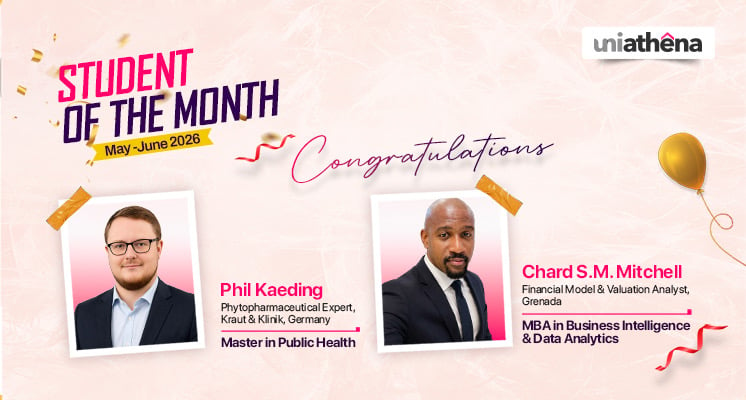
🌟 Students of the Month | May – June 2026 🌟
Read More
1
mins read





🌟 Students of the Month | May – June 2026 🌟
Read more
1
mins read
Get in Touch

It’s Time to Start
Join NowMost Popular Online Specialization
- Master of International Business Administration
- Master of Business Administration
- MBA in General Management- FastTrack
- Master in Innovation and Entrepreneurship
- MBA-Family Business Management
- Master in Procurement and Contract Management
- Extended Diploma in Business Analytics (SCQF Level 11)
- Diploma in Supply Chain and Logistics Management (SCQF Level 11)
- Strategic Human Resource Management Practitioner
- Master in Data Science
- Master in Engineering Management
Trending Online
- Integrated Doctorate of Business Administration
- Postgraduate Certificate in Finance for Next Generation Managers
- Master of Business Administration- General Management (Fast Track)
- Postgraduate Certificate in Socio-Economic and Legal Framework
- Postgraduate Certificate in Business Sustainability
- Certified Manager
- Supply Chain Management Practitioner
- MBA - AI in Business
- MBA - Accounting & Finance
- Master in Supply Chain and Logistics Management
Top Universities Online Certificates
- Postgraduate Certificate in International Marketing Management
- Postgraduate Certificate In International Human Resource Management
- Postgraduate Certificate in Strategic Management
- Postgraduate Certificate in Procurement & Contracts Management
- Postgraduate Certificate in Business Analytics
- Postgraduate Certificate in Strategic Supply Chain & Logistics Management
- Postgraduate Certificate in Human Resource and Leadership
- Project Management Practitioner
- Postgraduate Certificate in Supply Chain Design & Implementation
- Postgraduate Certificate in Management Accounting and Finance
Accredited Online Degree Program
- MBA - Digital Transformation
- MBA - Family Business Management
- MBA - Marketing Management
- MBA in Quality Management
- MBA - Business Intelligence & Data Analytics
- MBA in Operations & Project Management
- MBA in Energy Management
- MBA In Construction & Safety Management
- Master in Organisational Leadership
- Master in Public Health
- Master in Construction Management
- Bachelor of Arts in Business Administration


 Install Now


UniAthena is an Ed-Tech, offering flexible, affordable learning solutions, including Free-Learning Upskilling Courses and Academic Programs in partnerships with accredited and globally renowned universities and professional qualification bodies.


Do you have any questions ?
Feel free to send us your questions or request a free consultation
Send a message
UK
Athena Global Education
Magdalen Centre,
Robert Robinson Avenue,
Oxford, OX4 4GA, UK
Phone : 01865 784299
MIDDLE EAST
Athena Global Education FZE
Block L-03, First Floor,
P O Box 519265, Sharjah Publishing City,
Free Zone, Sharjah, UAE
Phone : +971 55 879 5492
INDIA
Uniathena Private Limited
9A,Midas Tower
Phase 1
Hinjewadi Rajiv Gandhi Infotech Park
Pune-411057
Phone: +91 9145665544
All Copyrights Reserved @ Athena Global Education 2021-2026