-

Bachelor's

-

Masters
-

MBA
-

Doctorate
-

Micro Credit
-

Explore all Courses
-
Postgraduate Certifications

-
Postgraduate Diploma
-
Undergraduate Diploma
-
Diploma



Future of Freelancing in 2026–27: Is It Worth Doing?

Author: munazzah ali
|6
MINS READ
| 0
| 1,396
Created On: 05 February, 2026
Share




Table Of Contents (TOC):
- Key Takeaways
- Freelancing for Beginners: What to Expect?
- AI’s Expanding Role in Freelance Work
- Benefits of Freelancing: Why It’s Gaining Momentum
- What Are the Best Freelancing Skills for the Future?
- How to Start Freelancing in 2026: A Practical Path
- Conclusion
- FAQ’s
The careers in freelancing are quickly re-establishing the process of how professionals generate income, build professional identity, and achieve long-term career growth.The Future of Freelancing is no longer speculative, as it is already unfolding across industries, geographies, and skill levels.
According to the Future Workforce Index report, 28% of skilled knowledge workers currently operate as freelancers or independent professionals, highlighting the extent to which freelance work has become part of the contemporary economy.
With the trends of freelancing changing and the freelance market becoming more organized, professionals are posing a practical question: Is freelance work really something to consider in 2026-27, or is it another trend that will fade away in the short term? This article explores the future of freelancing in terms of the range, capabilities, and prospects that define it.
Key Takeaways:
- Freelancing is shifting from informal gig work to sustainable, long-term career models.
- Freelance opportunities are increasing at a faster pace due to AI, remote work, and digital platforms.
- Beginners can join the freelance industry quickly through specialized expertise and demonstrations of competence.
- Formal education and training is a key to successful freelancing in the long term.
Freelancing for Beginners: What to Expect?
In order to know what freelancing is and how it works, it is better to begin with the fundamentals. A freelancer is a self-employed professional who provides services to clients without a single employer. In simple terms, the work of a freelancer is determined by their specialization, i.e., writing, design, data analysis, consulting, marketing, or technology delivery.
With that said, the field of freelancing is broader than ever in 2026. Newcomers can take a small step with the availability of the best freelance platforms, online freelancing tools, and remote freelance jobs.
AI’s Expanding Role in Freelance Work
Artificial intelligence is no longer replacing freelancers; it is changing the way freelance work is provided. AI has been applied to research, content generation, data analysis, design support, and automation. This enables freelancers to work more quickly, price smarter, and focus on higher-value thinking.
Strategic, interpretative, creative, and decision-making roles are increasingly becoming popular. As a result, freelancing is becoming more of an opportunity for those who are flexible, as opposed to those who are rigid in changing.
Benefits of Freelancing: Why It’s Gaining Momentum
Increased Management of Career Direction:
Autonomy is one of the key benefits of freelance careers. By picking projects, clients, and timelines, freelancers are able to align with their personal and professional objectives.
Availability of International Job Opportunities:
Through cross-border digital cooperation, freelancers are able to get online freelance jobs from international clients. This creates less reliance on local labor markets and greater earning potential.
Faster Skill-to-Income Conversion:
Freelancing is a direct reward for skills. Since the majority of the required freelancing competencies in the future are going to change, the professionals will be able to upskill rapidly and monetise their ability.
Portfolio-Driven Growth:
Freelancers develop differently from traditional jobs by demonstrating their proof of work. A strong portfolio sometimes counts more than the position, so one can rise the career ladder faster.
Also Read: How to Make Money on Social Media?
What Are the Best Freelancing Skills for the Future?
Digital Intelligence and Technology
The most promising future freelancing skills include skills such as data analytics, AI tools, cybersecurity awareness, and automation. Such positions are long-term and scalable.
Content, Creative Strategy, and Marketing
The trending freelance jobs include digital marketing, UX design, video storytelling, and content strategy because businesses focus on visibility and engagement.
Strategic Services, Business and Consulting
The career prospects of project management, operations consulting, HR advisory, and financial analysis are emerging as attainable freelancing jobs, particularly among experienced professionals.
The best freelancing skills that one can develop in the future are through well-organized learning programs, like the structured and career-focused programs provided at UniAthena, enabling learners to remain competitive and credible.
Also Read: What is a Digital Nomad and How to Become One?
How to Start Freelancing in 2026: A Practical Path
Clarify Your Freelance Direction
The first thing to do is to find out what you are good at and what you really like doing. It could be content creation, data analysis, design, consulting, or tech support, but when it comes to picking the right type of freelance job, you can position yourself well by selecting the correct type of work.
The narrow niche allows having clients who, at first, can easily comprehend your value and believe in your professionalism.
Know Market Requirement and Pricing Pattern
Research the demand of the area and the price that clients will pay before intervening. Research the most popular platforms to examine competition, the necessary skills, and prices.
This understanding will make your offerings in line with the actual needs of the freelance market and will allow you to set prices for your services firmly and never undervalue your services.
Create a Portfolio that Demonstrates the Ability
Years of experience are not required to prove value. A robust, evidence-based portfolio can be built based on sample projects, certifications, case studies, or even coursework.
This step is important to newcomers so that they can obtain optimal freelance jobs for beginners, since clients usually want to know skills demonstrated rather than the job title.
Make Profiles That Sell, Not Just Move
Your profile is your online shop. Make it as efficient by describing clear services, using the right keywords, and providing powerful examples of work. Well-developed profiles will enhance visibility, credibility, and success in getting regular and quality projects.
Deliver Continuously and Grow Strategically
Success in freelancing at the beginning relies on reliability. Good reviews, repeat customers, and recommendations are the results of high-quality delivery. Over time, these build momentum, allowing you to refine your offerings and grow sustainably, which are major steps to success in the freelancing future.
Also Read: How to Start Freelancing With No Experience
Conclusion
The Future of Freelancing in 2026–27 is not about uncertainty; it is about strategic independence. With the increasing professionalization and skill-based nature of freelance work, professionals who invest in education, adaptability, and positioning will thrive.
Be it part-time projects you are venturing into or full freelance careers you are developing, the opportunity is real and growing. Freelancing can no longer be a choice with the right capabilities, platforms, and directions. With the help of future-oriented learning ecosystems, such as UniAthena, it’s a futuristic career plan.
FAQs
Q1.Which online freelance jobs are best for beginners?
A: The entry-level freelance work opportunities include writing content, social media support, basic design, virtual assistant, and digital marketing work. These positions are simple to enter into, in demand, and help build experience quickly.
Q2. Can a beginner really work as a freelancer?
A: Yes. Many freelancers start with basic skills and grow by working on small projects. Clear communication, consistency, and a willingness to learn matter more than prior experience.
Q3. Why is freelancing increasing so fast?
A: The trend of freelancing is rising because of the flexibility in work, online platforms, and the adoption of in-demand skilled labor by organizations over full-time employees.
Q4. Which industries have the most freelance jobs?
A: The most abundant freelance opportunities are currently provided by technology, digital marketing, content creation, design, and business consulting.
Explore Related Courses











COMMENTS(0)
Explore Related Courses
Our Popular Insights
Careers are shifting faster than ever, and staying relevant takes more than experience. Explore UniAthena’s most-read blogs for sharp insights, emerging skills, and practical pathways that help you move forward with clarity and confidence in a changing professional world.

What Is Grok AI?
Read More
9
mins read
🌟 Top Project Performer – June 2026 🌟
Read More
1
mins read


🌟 Top Project Performer – May 2026 🌟
Read More
1
mins read

Top Cybersecurity Courses in Ghana
Read More
7
mins read
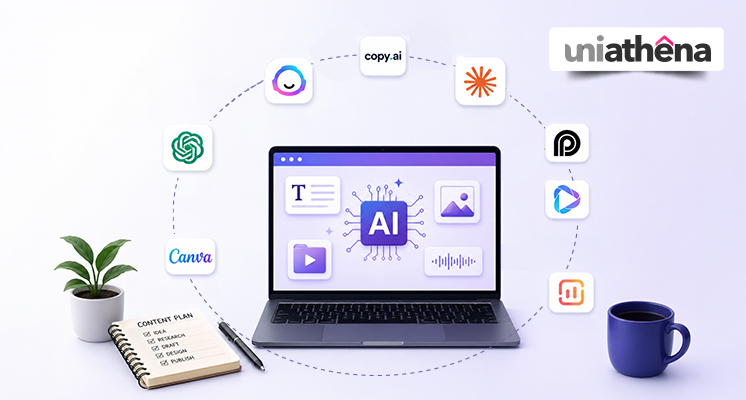
Best AI Tools for Content Creation
Read More
8
mins read
🌟 Top Project Performer – April 2026 🌟
Read More
1
mins read
What Is Grok AI?
Read more
9
mins read
🌟 Top Project Performer – June 2026 🌟
Read more
1
mins read
🌟 Top Project Performer – May 2026 🌟
Read more
1
mins read
Top Cybersecurity Courses in Ghana
Read more
7
mins read
Best AI Tools for Content Creation
Read more
8
mins read
🌟 Top Project Performer – April 2026 🌟
Read more
1
mins read
Get in Touch

It’s Time to Start
Join NowMost Popular Online Specialization
- Master of International Business Administration
- Master of Business Administration
- MBA in General Management- FastTrack
- Master in Innovation and Entrepreneurship
- MBA-Family Business Management
- Master in Procurement and Contract Management
- Extended Diploma in Business Analytics (SCQF Level 11)
- Diploma in Supply Chain and Logistics Management (SCQF Level 11)
- Strategic Human Resource Management Practitioner
- Master in Data Science
- Master in Engineering Management
Trending Online
- Integrated Doctorate of Business Administration
- Postgraduate Certificate in Finance for Next Generation Managers
- Master of Business Administration- General Management (Fast Track)
- Postgraduate Certificate in Socio-Economic and Legal Framework
- Postgraduate Certificate in Business Sustainability
- Certified Manager
- Supply Chain Management Practitioner
- MBA - AI in Business
- MBA - Accounting & Finance
- Master in Supply Chain and Logistics Management
Top Universities Online Certificates
- Postgraduate Certificate in International Marketing Management
- Postgraduate Certificate In International Human Resource Management
- Postgraduate Certificate in Strategic Management
- Postgraduate Certificate in Procurement & Contracts Management
- Postgraduate Certificate in Business Analytics
- Postgraduate Certificate in Strategic Supply Chain & Logistics Management
- Postgraduate Certificate in Human Resource and Leadership
- Project Management Practitioner
- Postgraduate Certificate in Supply Chain Design & Implementation
- Postgraduate Certificate in Management Accounting and Finance
Accredited Online Degree Program
- MBA - Digital Transformation
- MBA - Family Business Management
- MBA - Marketing Management
- MBA in Quality Management
- MBA - Business Intelligence & Data Analytics
- MBA in Operations & Project Management
- MBA in Energy Management
- MBA In Construction & Safety Management
- Master in Organisational Leadership
- Master in Public Health
- Master in Construction Management
- Bachelor of Arts in Business Administration


 Install Now


UniAthena is an Ed-Tech, offering flexible, affordable learning solutions, including Free-Learning Upskilling Courses and Academic Programs in partnerships with accredited and globally renowned universities and professional qualification bodies.


Do you have any questions ?
Feel free to send us your questions or request a free consultation
Send a message
UK
Athena Global Education
Magdalen Centre,
Robert Robinson Avenue,
Oxford, OX4 4GA, UK
Phone : 01865 784299
MIDDLE EAST
Athena Global Education FZE
Block L-03, First Floor,
P O Box 519265, Sharjah Publishing City,
Free Zone, Sharjah, UAE
Phone : +971 55 879 5492
INDIA
Uniathena Private Limited
9A,Midas Tower
Phase 1
Hinjewadi Rajiv Gandhi Infotech Park
Pune-411057
Phone: +91 9145665544
All Copyrights Reserved @ Athena Global Education 2021-2026