-

Bachelor's

-

Masters
-

MBA
-

Doctorate
-

Micro Credit
-

Explore all Courses
-
Postgraduate Certifications

-
Postgraduate Diploma
-
Undergraduate Diploma
-
Diploma



AI vs. Data Science: Which is Better?

Author: munazzah ali
|6
MINS READ
| 0
| 213
Created On: 26 June, 2025 Updated On: 07 July, 2025
Share




Table Of Contents (TOC):
- What Is Artificial Intelligence (AI)?
- Applications of Artificial Intelligence
- What Is Data Science?
- Applications of Data Science
- Difference Between Data Science and AI
- AI or Data Science – Which Is Better?
- Conclusion
- Bonus Points
Today's fast-developing digital environment has made the conversation around Data Science vs. Artificial Intelligence increasingly important. As businesses strive for competitive advantage through smart technologies and big data analytics, a key question emerges: What’s the real difference between Data Science and AI? And more importantly, which field offers better opportunities for career growth?
Let's discuss both disciplines, thereby helping you in selecting the appropriate career path.
What Is Artificial Intelligence (AI)?
Artificial Intelligence, or AI, refers to the ability of machines and systems to simulate human intelligence. AI is capable of learning from data, making decisions, and even adapting to new information over time.
Some common examples include:
- Voice assistants like Siri or Alexa
- Recommendation engines on Netflix or Amazon
- Self-driving cars
AI leverages machine learning and deep learning to empower machines with autonomous behavior and even creative thinking. This technology has transformed many industries by enhancing how systems process information, learn, and make decisions.
Exploring AI offers an excellent opportunity for individuals who wish to create innovative tools and solutions. Once you have grasped the fundamentals, you will likely want to learn about its practical applications and logical structures. That’s where structured learning comes in.
At UniAthena, we provide a range of introductory AI courses to guide you through the process, including a Diploma in Artificial Intelligence course. This course will provide you with an understanding of cutting-edge applications and end-to-end knowledge of the revolutionary impact of AI on various industries. Whether you are a beginner or an expert, this flexible learning accommodates easily around your busy schedule and can be completed with just 1-2 weeks of learning.
You can also explore the Basics of Artificial Intelligence: Learning Models course. This course will enhance your understanding of learning framework models, the role of probabilistic models in AI, and the significance of fuzzy logic in intelligent decision-making. This self-paced course includes 4–6 hours of learning and comes with a certification from CIQ, UK.
Applications of Artificial Intelligence
Artificial intelligence is changing industries in many ways through automation, predictive intelligence, and individualization.
A few areas include:
Healthcare: Medical data can be analyzed by AI algorithms to help diagnose illness, predict patient outcomes, and tailor treatment plans.
Finance: AI is utilized to detect fraud, perform risk analysis, and for algorithmic trading. It assists financial institutions in both customer service and decision-making.
Customer Support: AI-based chatbots increase customer engagement through immediate support and response for improved engagement with customers.
Self-Driving Cars: Autonomous cars use AI technology to steer through roads, detect roadblocks, and make decisions in real time to ensure safer driving.
What Is Data Science?
Data Science is the practice of using data to address problems and improve decisions. It involves the combination of math, statistics, computer science, and domain knowledge (as in business, healthcare, or marketing).
For instance, a Data Scientist could:
- Review sales data to identify trends
- Forecast what customers will buy next
- Assist a hospital in tracking patient outcomes
If you are keen on working with numbers, noticing patterns, and narrating with data points, then Data Science could be an ideal career path. It's a profession that blends analytical skills, technical expertise, and business understanding to discover insights and enable productive decision-making. From customer trend identification to sales prediction for the future, data science is vital to our contemporary digital world.
As organizations become increasingly reliant on data-driven strategies, there is an emerging need for professionals with the ability to understand and utilize data in meaningful ways. By learning some basics of data gathering, analysis, and interpretation, you can lay a strong foundation to move forward in this career.
When you’re ready to learn more, UniAthena’s got flexible programs to help you acquire them. Programs such as the Executive Diploma in Data Analytics provide you with an understanding of primary and secondary data that affects operational efficiency and introduce various models to improve business decisions. Besides, this self-paced course can be completed in a flexible learning period of 2–3 weeks.
Further, you can also explore the Mastering Business Analytics – Fundamentals course. This course provides an overview of business analytics with an analysis of key drivers and frameworks of the discipline. The course is flexible and can be completed in 1 week and comes with certification from Acacia University Professional Development (AUPD).
Applications of Data Science
Data Science has widespread applications in many industries, such as:
Business Analytics: Data science is used by organisations to analyze market patterns and buyer habits to assist in informed business decisions and operational optimization.
Healthcare: Data scientists examine healthcare data to enhance patient outcomes and automate healthcare services through the identification of significant trends and patterns.
Finance: Data science is critical in finance to analyze risk, detect fraud, and maximize the efficiency of investment strategies using predictive analysis.
Marketing: Marketers utilize data science in order to segment customers, customize campaigns, and measure campaign effectiveness to achieve a higher return on investment.
Difference Between Data Science and AI
Even though both fields deal with data, their goals are different.
Feature | Artificial Intelligence | Data Science |
Primary Objective | Simulate human intelligence and enable automation | Examine and interpret data |
Key Methods | Machine learning, Deep learning | Statistics, data mining visualization |
Outcome | Automation and smart systems | Reports, insights, and dashboards |
Examples | Chatbots, self-driving cars | Business reports and trend analysis |
AI or Data Science – Which Is Better?
If you are still wondering whether to pursue AI or Data Science, the straight truth is that it completely depends on what your interests and career aspirations are.
You should opt for AI if technology and coding are your areas of interest. AI is well-suited to career paths such as AI engineer, machine learning developer, or robotics specialist.
And those who are more inclined towards uncovering answers from data, solving business issues, and dealing with people should opt for Data Science. Career paths in this field include Data Analyst, Data Scientist, or Business Intelligence Expert.
Conclusion
To sum it up, AI vs Data Science is not one or the other being superior to the other. They are two strong fields that complement each other to create the future. Understanding the difference between Data Science and AI provides you with an informed choice regarding your career.
Whether you are fascinated by how machines learn or how data drives decisions, there's never been a better time to explore these domains. With UniAthena's flexible and affordable programs, it's easy to get started in either or both fields today.
Let your learning journey begin on the right platform, UniAthena!
Bonus Points:
- Jobs such as AI Data Analyst or Machine Learning Operations (MLOps) now blend AI and Data Science capabilities, making it well worth pursuing both in order to open up wider career possibilities.
- With Data Science and AI set to grow in an exponential manner, investment in either (or both) guarantees high relevance and employability in the future workplace.
Explore Related Courses










COMMENTS(0)
Explore Related Courses
Our Popular Insights
Careers are shifting faster than ever, and staying relevant takes more than experience. Explore UniAthena’s most-read blogs for sharp insights, emerging skills, and practical pathways that help you move forward with clarity and confidence in a changing professional world.

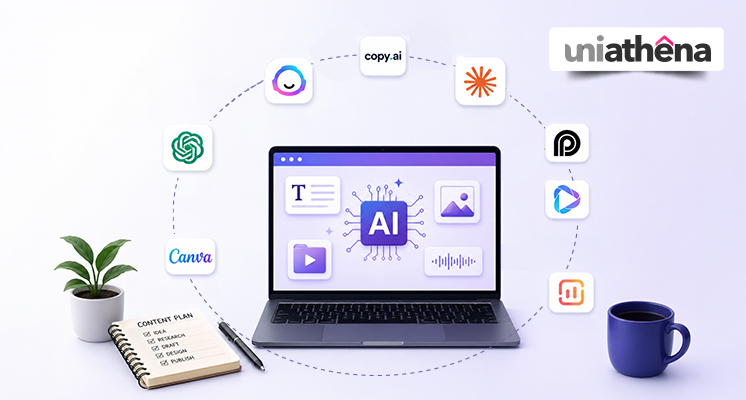
Best AI Tools for Content Creation
Read More
9
mins read

🌟 Top Project Performer – June 2026 🌟
Read More
1
mins read



🌟 Top Project Performer – May 2026 🌟
Read More
1
mins read


Best AI Tools for Content Creation
Read more
9
mins read
🌟 Top Project Performer – June 2026 🌟
Read more
1
mins read
🌟 Top Project Performer – May 2026 🌟
Read more
1
mins read
Get in Touch

It’s Time to Start
Join NowMost Popular Online Specialization
- Master of International Business Administration
- Master of Business Administration
- MBA in General Management- FastTrack
- Master in Innovation and Entrepreneurship
- MBA-Family Business Management
- Master in Procurement and Contract Management
- Extended Diploma in Business Analytics (SCQF Level 11)
- Diploma in Supply Chain and Logistics Management (SCQF Level 11)
- Strategic Human Resource Management Practitioner
- Master in Data Science
- Master in Engineering Management
Trending Online
- Integrated Doctorate of Business Administration
- Postgraduate Certificate in Finance for Next Generation Managers
- Master of Business Administration- General Management (Fast Track)
- Postgraduate Certificate in Socio-Economic and Legal Framework
- Postgraduate Certificate in Business Sustainability
- Certified Manager
- Supply Chain Management Practitioner
- MBA - AI in Business
- MBA - Accounting & Finance
- Master in Supply Chain and Logistics Management
Top Universities Online Certificates
- Postgraduate Certificate in International Marketing Management
- Postgraduate Certificate In International Human Resource Management
- Postgraduate Certificate in Strategic Management
- Postgraduate Certificate in Procurement & Contracts Management
- Postgraduate Certificate in Business Analytics
- Postgraduate Certificate in Strategic Supply Chain & Logistics Management
- Postgraduate Certificate in Human Resource and Leadership
- Project Management Practitioner
- Postgraduate Certificate in Supply Chain Design & Implementation
- Postgraduate Certificate in Management Accounting and Finance
Accredited Online Degree Program
- MBA - Digital Transformation
- MBA - Family Business Management
- MBA - Marketing Management
- MBA in Quality Management
- MBA - Business Intelligence & Data Analytics
- MBA in Operations & Project Management
- MBA in Energy Management
- MBA In Construction & Safety Management
- Master in Organisational Leadership
- Master in Public Health
- Master in Construction Management
- Bachelor of Arts in Business Administration


 Install Now


UniAthena is an Ed-Tech, offering flexible, affordable learning solutions, including Free-Learning Upskilling Courses and Academic Programs in partnerships with accredited and globally renowned universities and professional qualification bodies.


Do you have any questions ?
Feel free to send us your questions or request a free consultation
Send a message
UK
Athena Global Education
Magdalen Centre,
Robert Robinson Avenue,
Oxford, OX4 4GA, UK
Phone : 01865 784299
MIDDLE EAST
Athena Global Education FZE
Block L-03, First Floor,
P O Box 519265, Sharjah Publishing City,
Free Zone, Sharjah, UAE
Phone : +971 55 879 5492
INDIA
Uniathena Private Limited
9A,Midas Tower
Phase 1
Hinjewadi Rajiv Gandhi Infotech Park
Pune-411057
Phone: +91 9145665544
All Copyrights Reserved @ Athena Global Education 2021-2026