-

Bachelor's

-

Masters
-

MBA
-

Doctorate
-

Micro Credit
-

Explore all Courses
-
Postgraduate Certifications

-
Postgraduate Diploma
-
Undergraduate Diploma
-
Diploma



What is the Role of AI in Education?
Author: aishwarya sancheti
|4
MINS READ
| 0
| 232
Created On: 14 July, 2025
Share




Table of Contents (TOC):
- Why AI Matters in Today’s Learning Environment
- Applications
- Future Role
- Human Impact
- Learn AI, the Smart Way: Online AI Learning at UniAthena
- Conclusion
- Bonus Points
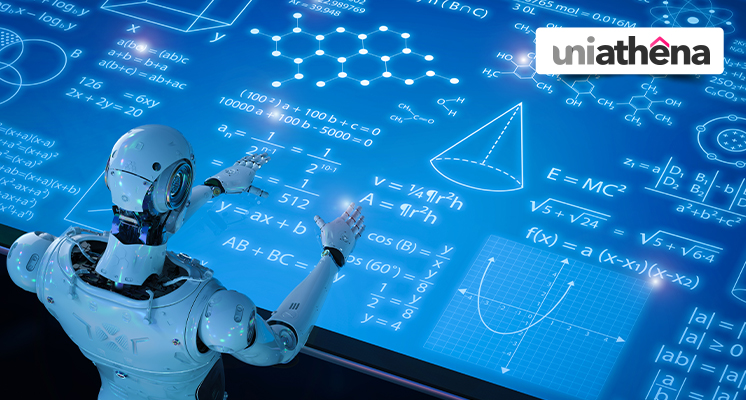
We have all seen how technology is transforming the way we operate, but the most significant shift is happening in the classroom. AI is not supposed to replace a teacher in education today, but is intended to provide responsive support for competent learning.
Consider having a student tool to help them pivot back to a challenging topic when they first become stuck, or giving the teacher opportunities to spend less time grading and more time engaging with their students. That's the support that artificial intelligence in education is providing right now.
AI in education is extending the possibilities from customizing content to a learner's pace to simply streamlining daily academic tasks. If you're wondering how this use of AI even looks in real life, enrolling in an online AI learning course can give you a little peek at it from the inside.
Applications
AI offers a wide range of applications in education. Key areas include personalized tutoring, intelligent content, and data analytics. These AI tools are already in classrooms and online platforms.
For example:
- Customized Tutoring: AI-powered systems are tailored to students' learning levels. For example, if the student is stuck on a math problem, the AI can offer a different way to solve the problem.
- Smart Content: AI can generate or select lesson materials that reflect the needs of students (i.e., the best map to use in a geography lesson).
- Assessment & Feedback: Auto-grader and plagiarism detector tools use AI to check student work quickly, giving students instant feedback.
- Data Analytics: Schools use learning analytics to spot trends. AI can find which topics many students miss, so teachers can adjust lessons before problems arise.
These applications show how AI for learning is changing day-to-day teaching and learning.
Future Role
Looking ahead, AI is already reshaping classrooms, and we can expect it to make learning even more personalized and flexible.
For example:
- Adaptive Curricula: Classes could use AI to adjust lessons for each student. If many students find a topic hard, the class plan could automatically add more practice to that topic.
- Teaching Assistants: Virtual assistants might help teachers by suggesting resources or summarizing student progress, giving teachers more time for mentoring.
- Global Access: Online AI learning means custom tutoring can reach students anywhere. This technology could help close gaps between schools by giving every learner access to high-quality, tailored education.
Many believe AI is the future of education because it can make learning more adaptive and far-reaching. Still, this future must be guided by people. UNESCO says AI in education should uphold inclusion and equity, so all students benefit. In other words, we must shape AI’s role to serve human goals rather than just automate tasks.
Human Impact
Teachers who use AI often say it makes their work more rewarding. With AI handling repetitive tasks, educators can spend more time engaging with students. Experts emphasize that AI should augment teachers rather than replace them. Students benefit too: AI that adapts to their pace can improve engagement and learning outcomes.
AI’s growth also brings concerns. Educators must protect student data and guard against biased algorithms. As more coursework moves online, many schools also lean on an AI detector to confirm that submitted work reflects a student's own effort rather than generated text. Not every student has equal access to technology, so schools need to ensure these tools help close gaps. Ultimately, AI should empower learners and teachers, not outsmart them.
Learn AI, the Smart Way: Online AI Learning at UniAthena
If you're interested in the implications of AI in education and want to leap into the future of education, it's time to get off the sidelines and into action.
UniAthena provides worldwide recognized, flexible diploma courses, programs, and degrees that are designed for the professionals of tomorrow.
Explore top-tier programs such as:
- Basics of Artificial Intelligence - a perfect starting point for anyone new to AI
- Diploma in Artificial Intelligence - dive deeper into real-world applications
- PG Diploma in AI & Machine Learning - for professionals aiming to lead digital change
- MBA Essentials with Artificial Intelligence - learn how AI intersects with leadership and strategy
These programs reflect the future of education: practical, digital-first, and globally recognized.
Conclusion
AI in the education sector is a powerful tool. Its role is to assist teachers and enhance learning. The importance of AI in education comes from its ability to personalize learning, save time, and open up new possibilities for the future of education. However, educators must keep the human element at the center.
By learning about AI through online courses and following best practices, educators can harness AI’s benefits safely. In the end, the best use of AI in education is one that makes teaching innovative and learning inclusive.
Bonus Points:
- AI could reduce teachers’ workload by up to 13 hours per week, especially in grading, planning, and administrative tasks.
- More than 50% of EdTech platforms globally incorporated AI-based features as of 2024, such as personalized learning pathways and smart assessments.
Explore Related Courses









COMMENTS(0)
Explore Related Courses
Our Popular Insights
Careers are shifting faster than ever, and staying relevant takes more than experience. Explore UniAthena’s most-read blogs for sharp insights, emerging skills, and practical pathways that help you move forward with clarity and confidence in a changing professional world.









Get in Touch

It’s Time to Start
Join NowMost Popular Online Specialization
- Master of International Business Administration
- Master of Business Administration
- MBA in General Management- FastTrack
- Master in Innovation and Entrepreneurship
- MBA-Family Business Management
- Master in Procurement and Contract Management
- Extended Diploma in Business Analytics (SCQF Level 11)
- Diploma in Supply Chain and Logistics Management (SCQF Level 11)
- Strategic Human Resource Management Practitioner
- Master in Data Science
- Master in Engineering Management
Trending Online
- Integrated Doctorate of Business Administration
- Postgraduate Certificate in Finance for Next Generation Managers
- Master of Business Administration- General Management (Fast Track)
- Postgraduate Certificate in Socio-Economic and Legal Framework
- Postgraduate Certificate in Business Sustainability
- Certified Manager
- Supply Chain Management Practitioner
- MBA - AI in Business
- MBA - Accounting & Finance
- Master in Supply Chain and Logistics Management
Top Universities Online Certificates
- Postgraduate Certificate in International Marketing Management
- Postgraduate Certificate In International Human Resource Management
- Postgraduate Certificate in Strategic Management
- Postgraduate Certificate in Procurement & Contracts Management
- Postgraduate Certificate in Business Analytics
- Postgraduate Certificate in Strategic Supply Chain & Logistics Management
- Postgraduate Certificate in Human Resource and Leadership
- Project Management Practitioner
- Postgraduate Certificate in Supply Chain Design & Implementation
- Postgraduate Certificate in Management Accounting and Finance
Accredited Online Degree Program
- MBA - Digital Transformation
- MBA - Family Business Management
- MBA - Marketing Management
- MBA in Quality Management
- MBA - Business Intelligence & Data Analytics
- MBA in Operations & Project Management
- MBA in Energy Management
- MBA In Construction & Safety Management
- Master in Organisational Leadership
- Master in Public Health
- Master in Construction Management
- Bachelor of Arts in Business Administration


 Install Now


UniAthena is an Ed-Tech, offering flexible, affordable learning solutions, including Free-Learning Upskilling Courses and Academic Programs in partnerships with accredited and globally renowned universities and professional qualification bodies.


Do you have any questions ?
Feel free to send us your questions or request a free consultation
Send a message
UK
Athena Global Education
Magdalen Centre,
Robert Robinson Avenue,
Oxford, OX4 4GA, UK
Phone : 01865 784299
MIDDLE EAST
Athena Global Education FZE
Block L-03, First Floor,
P O Box 519265, Sharjah Publishing City,
Free Zone, Sharjah, UAE
Phone : +971 55 879 5492
INDIA
Uniathena Private Limited
9A,Midas Tower
Phase 1
Hinjewadi Rajiv Gandhi Infotech Park
Pune-411057
Phone: +91 9145665544
All Copyrights Reserved @ Athena Global Education 2021-2026