-

Bachelor's

-

Masters
-

MBA
-

Doctorate
-

Micro Credit
-

Explore all Courses
-
Postgraduate Certifications

-
Postgraduate Diploma
-
Undergraduate Diploma
-
Diploma



Redefining Leadership in the Age of AI and Automation
Author: ruchika nangia
|4
MINS READ
| 2
| 110
Created On: 07 August, 2025
Share




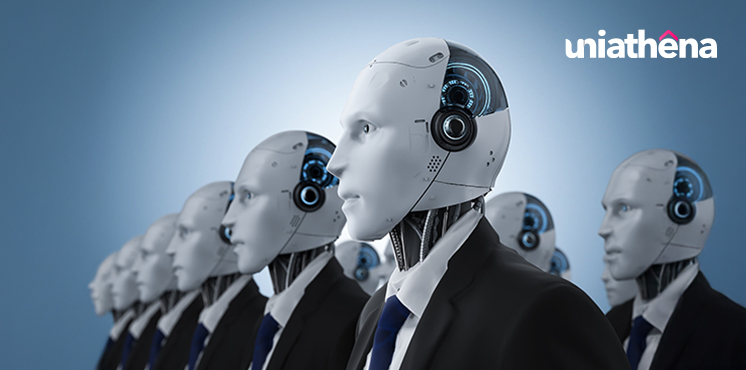
As AI and automation reshape our world, the old playbook for leadership is obsolete. Move beyond the rigid "command-and-control" models; today's leaders must embody adaptability, empathy, and a thirst for continuous learning. Success isn't about battling technology, but about mastering it to unleash team potential and ignite innovation.
Human-Centered Leadership in a Digital World
In this AI-driven era, human leadership—rooted in emotional intelligence, diversity, and flexibility—is no longer a bonus; it's a necessity. The most impactful leaders aren't just technically skilled; they're master builders of trust and collaboration, expertly navigating uncertainty with clear direction. The future demands leaders who can seamlessly guide both humans and machines.
The Changing Nature of Work
AI's rapid ascent is revolutionizing workplaces across every industry, from manufacturing to healthcare. It's fundamentally altering how we work, make decisions, and the skills we need. Leaders must embrace this transformation, guiding their teams to become future-proof by leveraging technology.
Structural Shifts and Collaboration
This isn't just a tech trend; AI is disrupting every sphere where routine tasks and data-driven decisions are common. The most profound changes are structural: flattened hierarchies, evolving roles, and a surge in cross-functional collaboration.
What Leadership Needs Now
Ultimately, leadership is the linchpin of success. It's less about being a tech guru and more about possessing the curiosity, adaptability, and unwavering confidence to lead through ambiguity. Leadership today isn’t about heroics; we need leaders who can forge trust, empower others, and see technology as a powerful ally for progress, not a looming threat.
Amplifying Human Potential Through AI
The core mission for leaders is ensuring AI amplifies human potential, instead of replacing it. This means empowering employees to unleash their creativity and higher-value skills. It's about finding that sweet spot between automation and human judgment, strategically leveraging AI for quicker, smarter decisions.
To truly unlock these advantages, organizations must invest in rock-solid data practices, continuous skill development, and a culture that celebrates experimentation and intelligent risk-taking.
A Modern Parable: Gary vs. the Algorithm
Summarising the above with the help of the following example -
"Gary vs. the Algorithm"
Gary, a seasoned manager, took pride in traditional leadership. He trusted his instincts, knew his people, and figured he didn’t need much more than experience and a solid routine.
Then ALVIN arrived, the new AI assistant designed to support project planning, flag risks, and analyze team sentiment. Gary didn’t know what to make of it at first. It was fast, organized, and constantly updated; way more data than he could keep up with.
Gary attempted to compete with ALVIN. He doubled down on check-ins, sent out more updates, and stuck to what had always worked. But when ALVIN flagged early signs of team stress that Gary hadn’t noticed, it caught him off guard.
Instead of pushing back, Gary adjusted. He started using ALVIN's reports; not to replace his judgment, but to sharpen it. He asked more questions, made time to listen, and shifted from managing tasks to supporting people.
Over time, his team opened up more, and performance improved in ways he hadn’t expected. He didn’t become a different person, but he became a better leader. He focused on empathy, creativity, and building connections.
Confronting the Challenges of AI Adoption
AI brings a lot of promise, but it also comes with real challenges. From privacy concerns to biased algorithms, it’s not always smooth sailing. Leaders need to stay alert, ask the right questions, and make sure the tools they use are fair and responsible.
There’s also the people's side of it. Automation can put jobs at risk or create anxiety about what’s next. That’s why leaders have to lead with empathy, help teams adapt, and invest in learning, not just tech.
Moral of the Story
In the age of AI, leadership isn’t about knowing all the answers. It’s about showing up with clarity, listening, and knowing when to trust people over predictions. The best leaders don’t compete with the tech. They make it work for their team.
Explore Related Courses









COMMENTS(2)

UniAthena
Thank you for your support. Keep browsing. You can visit our page uniathena.com for more interesting articles.
Thank you for your support. Keep browsing. You can visit our page uniathena.com for more interesting articles.
Explore Related Courses
Our Popular Insights
Careers are shifting faster than ever, and staying relevant takes more than experience. Explore UniAthena’s most-read blogs for sharp insights, emerging skills, and practical pathways that help you move forward with clarity and confidence in a changing professional world.






What is the Role of AI in Education?
Read More
4
mins read



What is the Role of AI in Education?
Read more
4
mins read
Get in Touch

It’s Time to Start
Join NowMost Popular Online Specialization
- Master of International Business Administration
- Master of Business Administration
- MBA in General Management- FastTrack
- Master in Innovation and Entrepreneurship
- MBA-Family Business Management
- Master in Procurement and Contract Management
- Extended Diploma in Business Analytics (SCQF Level 11)
- Diploma in Supply Chain and Logistics Management (SCQF Level 11)
- Strategic Human Resource Management Practitioner
- Master in Data Science
- Master in Engineering Management
Trending Online
- Integrated Doctorate of Business Administration
- Postgraduate Certificate in Finance for Next Generation Managers
- Master of Business Administration- General Management (Fast Track)
- Postgraduate Certificate in Socio-Economic and Legal Framework
- Postgraduate Certificate in Business Sustainability
- Certified Manager
- Supply Chain Management Practitioner
- MBA - AI in Business
- MBA - Accounting & Finance
- Master in Supply Chain and Logistics Management
Top Universities Online Certificates
- Postgraduate Certificate in International Marketing Management
- Postgraduate Certificate In International Human Resource Management
- Postgraduate Certificate in Strategic Management
- Postgraduate Certificate in Procurement & Contracts Management
- Postgraduate Certificate in Business Analytics
- Postgraduate Certificate in Strategic Supply Chain & Logistics Management
- Postgraduate Certificate in Human Resource and Leadership
- Project Management Practitioner
- Postgraduate Certificate in Supply Chain Design & Implementation
- Postgraduate Certificate in Management Accounting and Finance
Accredited Online Degree Program
- MBA - Digital Transformation
- MBA - Family Business Management
- MBA - Marketing Management
- MBA in Quality Management
- MBA - Business Intelligence & Data Analytics
- MBA in Operations & Project Management
- MBA in Energy Management
- MBA In Construction & Safety Management
- Master in Organisational Leadership
- Master in Public Health
- Master in Construction Management
- Bachelor of Arts in Business Administration


 Install Now


UniAthena is an Ed-Tech, offering flexible, affordable learning solutions, including Free-Learning Upskilling Courses and Academic Programs in partnerships with accredited and globally renowned universities and professional qualification bodies.


Do you have any questions ?
Feel free to send us your questions or request a free consultation
Send a message
UK
Athena Global Education
Magdalen Centre,
Robert Robinson Avenue,
Oxford, OX4 4GA, UK
Phone : 01865 784299
MIDDLE EAST
Athena Global Education FZE
Block L-03, First Floor,
P O Box 519265, Sharjah Publishing City,
Free Zone, Sharjah, UAE
Phone : +971 55 879 5492
INDIA
Uniathena Private Limited
9A,Midas Tower
Phase 1
Hinjewadi Rajiv Gandhi Infotech Park
Pune-411057
Phone: +91 9145665544
All Copyrights Reserved @ Athena Global Education 2021-2026