-

Bachelor's

-

Masters
-

MBA
-

Doctorate
-

Micro Credit
-

Explore all Courses
-
Postgraduate Certifications

-
Postgraduate Diploma
-
Undergraduate Diploma
-
Diploma



Degree or Diploma: Which is Better? [2026]
![Degree or Diploma: Which is Better? [2026]](https://uniathenaprods3.uniathena.com/s3fs-public/2026-02/Degree-or-Diploma-Which-is-Better.jpg?VersionId=FD57h91F4eTkvM_T7lTWECW90.YvKD9C)
Author: urvi malusare
|6
MINS READ
| 2
| 654
Created On: 19 September, 2024 Updated On: 09 February, 2026
Share




Table of Contents (TOC):
- Introduction
- Key Takeaways
- What Is a Diploma Course?
- What is a Degree Program?
- Diploma vs Degree: Which is Better?
- Is A Diploma Better Than A Degree?
- Future Trends: The Changing Landscape of Education
- Conclusion
- FAQs
Introduction
After finishing high school, one question comes up almost immediately: which is better, diploma or degree? The answer affects how long you study, how much you spend, and the kind of roles you qualify for. A diploma may help you enter the workforce faster, while a degree often offers broader academic exposure and long-term career flexibility. But neither option is universally better.
This article breaks down the difference between a diploma and a degree, compares them side by side, and helps you decide which path aligns better with your career goals and current situation.
Key Takeaways:
A diploma is designed for quicker, skill-focused entry into the workforce, while a degree provides broader academic depth and long-term career flexibility.
- The better choice between a diploma and a degree depends on career goals, time commitment, and cost tolerance, not on perceived prestige.
- Employers increasingly assess candidates using a combination of qualifications, skills, and experience rather than a single credential.
- With job skills evolving rapidly, many professionals now combine diplomas, degrees, and additional credentials at different stages of their careers.
What is a Diploma Course?
A Diploma is a specialised course designed to help you gain practical knowledge in a specific subject area. Diploma courses are shorter in duration, making them ideal for people who want to learn new skills in a quick and convenient way.
If you are looking for a way to learn a new subject, but you don’t want to commit to a full-time degree course, then a Diploma is a suitable option for you.
You can explore online Diplomas in specialized fields such as
- Environment Health and Safety,
- Business Administration,
- Data Analytics,
- International Human Resources, and more.
When considering a diploma vs a degree, a diploma is often the ideal choice for individuals seeking a fast-track learning experience.
What is a Degree Program?
Degree programs, on the other hand, are full-time academic courses offered by universities and colleges. These programs cover comprehensive aspects of a subject and usually require several years of study and commitment.
While online fast-track degree programs are available, the duration is typically one year. Due to their depth and duration, degree programs tend to be more expensive than diploma courses.
However, you can still pursue affordable online degrees from UniAthena in fields such as
- Bachelor of Arts in Business Administration
- MBA in General Management
- MBA in Artificial Intelligence in Business
- Master in Data Sciences
- Master in Supply Chain and Logistics Management
- Global MBA
Understanding the differences between a diploma and a degree will help you decide which learning path aligns better with your professional goals.
Diploma vs Degree: Which is Better?
Let’s understand which is better– a degree or a diploma in a side-by-side comparison:
Is a Diploma Better Than a Degree?
There is no one better than the other. When picking a degree or diploma, the choice must be made depending on your career goals and current circumstances.
If you are looking for a course that provides specialized learning on a particular subject, then a diploma would be a better option. But if you want to gain a broader understanding of the domain, getting a degree would be much better.
When considering diploma and degree differences, it is important to understand your needs and make a well-informed decision. If you are curious about a topic and want to learn the basics of it, you can find many free learning courses on UniAthena. These courses will help you get a better understanding of a subject and help you better understand which is better for you.
Also Read: Best Diploma Courses To Do in 2026
Future Trends: The Changing Landscape of Education
The way we learn and build careers is changing rapidly. Traditionally, a degree was seen as the best path to a high-paying job, while diplomas were considered a shortcut to quick employment. But today, things are different.
With the rise of online learning, skill-based hiring, and professional certifications, choosing between a diploma and a degree depends on individual career goals and industry requirements.
1. Micro-credentials Are Gaining Wider Acceptance
Short, skill-focused credentials are becoming an important part of formal education pathways. This shift reflects growing demand for learning models that deliver job-ready skills without requiring long academic commitments.
2. Employers Are Evaluating Skills Alongside Qualifications
Hiring decisions are no longer based on a single qualification. A growing number of organizations now use a portfolio-based approach, combining degrees, diplomas, certifications, work experience, and demonstrable skills to assess candidates. This approach allows employers to better evaluate real-world capability rather than relying only on academic credentials.
3. Online and Hybrid Learning Models Continue to Expand
Online and hybrid education formats are becoming a standard part of learning rather than an alternative option. These models offer flexibility for learners who want to balance education with work or other commitments, while still gaining recognised qualifications. As access to digital learning improves, more learners are choosing flexible study options that fit their career stage.
4. Rapid Skill Changes Are Influencing Education Choices
Job requirements are evolving faster than traditional education cycles. 39% of core skills required in today’s jobs are expected to change by 2030, highlighting the need for continuous learning and adaptability. As a result, learners increasingly combine diplomas, degrees, and additional credentials over time to stay relevant in the job market.
Also Read: Top Free Online Courses with Certificates
Conclusion
If you are fresh out of school, looking to get started in a field of your interest, and are wondering what the difference is between a diploma and a degree is then hopefully this article helped you out.
You can explore the range of free learning diploma courses offered on the UniAthena platform and learn the basics in only a few weeks. These diploma courses can help you get started in a career, and then if you want to upgrade your career further, you can consider getting a degree later. So instead of thinking “degree or diploma,” consider that a diploma and degree might help your career more.
FAQs
Q1. What is the main difference between a diploma and a degree?
A: A diploma focuses on specific, job-ready skills and is shorter in duration, while a degree offers broader academic learning over a longer period.
Q2. Is a diploma better than a degree for getting a job?
A: A diploma can help you enter the workforce faster, but a degree generally offers wider career options and better long-term growth.
Q3. Which is more affordable: a diploma or a degree?
A: Diploma courses usually cost less because they take less time to complete.
Q4. Can I pursue a degree after completing a diploma?
A: Yes, many learners use a diploma as a starting point and pursue a degree later to expand career opportunities.
Q5. Do employers value diplomas and degrees equally?
A: Employers assess candidates based on qualifications, skills, and experience, with the importance varying by role and industry.
Explore Related Courses













Explore Related Courses
Our Popular Insights
Careers are shifting faster than ever, and staying relevant takes more than experience. Explore UniAthena’s most-read blogs for sharp insights, emerging skills, and practical pathways that help you move forward with clarity and confidence in a changing professional world.


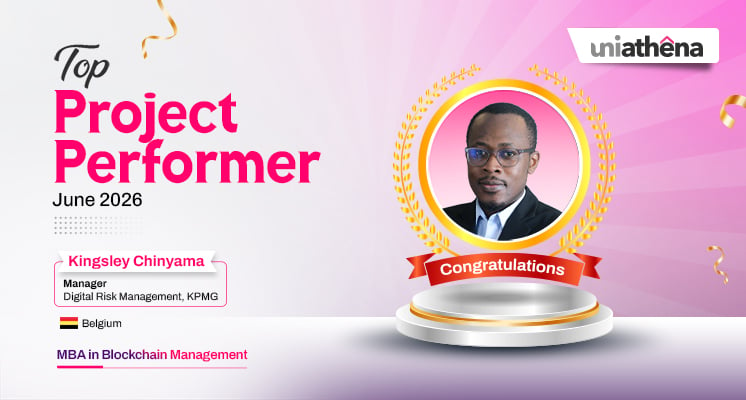
🌟 Top Project Performer – June 2026 🌟
Read More
1
mins read


🌟 Top Project Performer – May 2026 🌟
Read More
1
mins read

🌟 Top Project Performer – April 2026 🌟
Read More
1
mins read
🌟 Top Project Performer – June 2026 🌟
Read more
1
mins read

🌟 Top Project Performer – May 2026 🌟
Read more
1
mins read
🌟 Top Project Performer – April 2026 🌟
Read more
1
mins read
Get in Touch

It’s Time to Start
Join NowMost Popular Online Specialization
- Master of International Business Administration
- Master of Business Administration
- MBA in General Management- FastTrack
- Master in Innovation and Entrepreneurship
- MBA-Family Business Management
- Master in Procurement and Contract Management
- Extended Diploma in Business Analytics (SCQF Level 11)
- Diploma in Supply Chain and Logistics Management (SCQF Level 11)
- Strategic Human Resource Management Practitioner
- Master in Data Science
- Master in Engineering Management
Trending Online
- Integrated Doctorate of Business Administration
- Postgraduate Certificate in Finance for Next Generation Managers
- Master of Business Administration- General Management (Fast Track)
- Postgraduate Certificate in Socio-Economic and Legal Framework
- Postgraduate Certificate in Business Sustainability
- Certified Manager
- Supply Chain Management Practitioner
- MBA - AI in Business
- MBA - Accounting & Finance
- Master in Supply Chain and Logistics Management
Top Universities Online Certificates
- Postgraduate Certificate in International Marketing Management
- Postgraduate Certificate In International Human Resource Management
- Postgraduate Certificate in Strategic Management
- Postgraduate Certificate in Procurement & Contracts Management
- Postgraduate Certificate in Business Analytics
- Postgraduate Certificate in Strategic Supply Chain & Logistics Management
- Postgraduate Certificate in Human Resource and Leadership
- Project Management Practitioner
- Postgraduate Certificate in Supply Chain Design & Implementation
- Postgraduate Certificate in Management Accounting and Finance
Accredited Online Degree Program
- MBA - Digital Transformation
- MBA - Family Business Management
- MBA - Marketing Management
- MBA in Quality Management
- MBA - Business Intelligence & Data Analytics
- MBA in Operations & Project Management
- MBA in Energy Management
- MBA In Construction & Safety Management
- Master in Organisational Leadership
- Master in Public Health
- Master in Construction Management
- Bachelor of Arts in Business Administration


 Install Now


UniAthena is an Ed-Tech, offering flexible, affordable learning solutions, including Free-Learning Upskilling Courses and Academic Programs in partnerships with accredited and globally renowned universities and professional qualification bodies.


Do you have any questions ?
Feel free to send us your questions or request a free consultation
Send a message
UK
Athena Global Education
Magdalen Centre,
Robert Robinson Avenue,
Oxford, OX4 4GA, UK
Phone : 01865 784299
MIDDLE EAST
Athena Global Education FZE
Block L-03, First Floor,
P O Box 519265, Sharjah Publishing City,
Free Zone, Sharjah, UAE
Phone : +971 55 879 5492
INDIA
Uniathena Private Limited
9A,Midas Tower
Phase 1
Hinjewadi Rajiv Gandhi Infotech Park
Pune-411057
Phone: +91 9145665544
All Copyrights Reserved @ Athena Global Education 2021-2026